
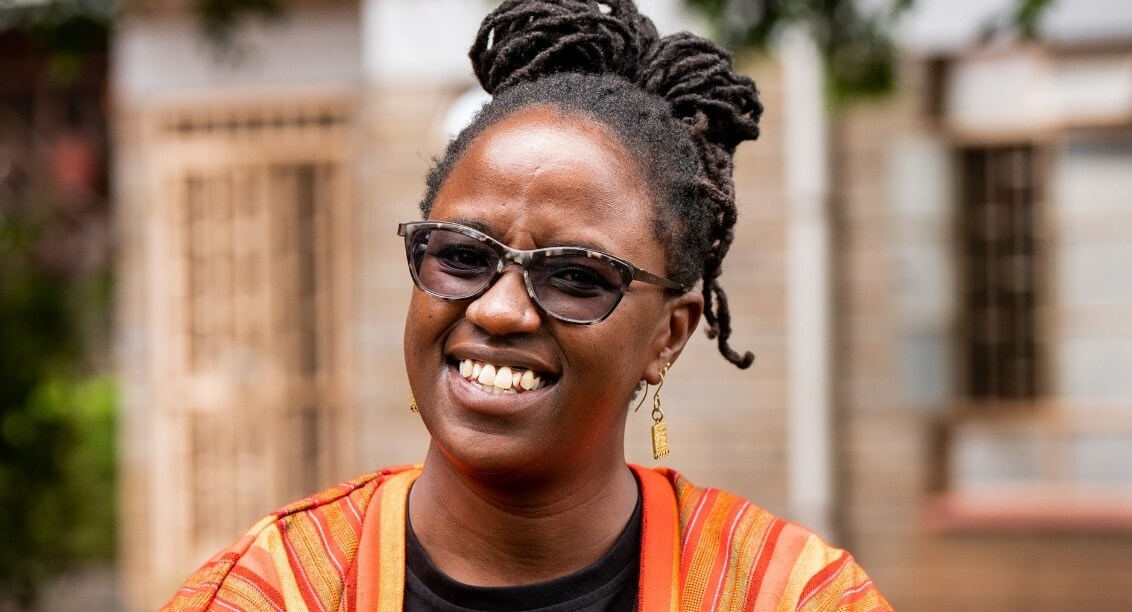
Transitions in organisations often come with uncertainty, especially in volatile industries such as the African creative industry where institutions rarely outlive their founders, let alone hand over the reins by design rather than crisis. Docubox, the East African Documentary Film Fund, marked a milestone in January 2026 when its founding leadership team stepped down after an 18-month transition period, passing the mantle to a new generation. At the helm, Judy Kibinge, the fund’s founder and Executive Director, handed over to Susan Mbogo, who had risen through the organisation from accountant to programs leadership before stepping into Kibinge’s role as the new Executive Director. It was, by most accounts, a rare thing in the industry: a planned succession rather than an unravelling.
When I meet Mbogo for this exclusive conversation, she’s just returned from Zambia, where Docubox received an Ignite Impact Award at the 2026 Women in Film and TV (WIFT) Africa Gala and Awards.
Stay ahead of Kenya & East Africa’s film and TV.
Get our stories in your inbox — Subscribe to our newsletter now.
I begin by asking what it feels like to occupy that chair, to guard a thirteen-year legacy while trying to cut her own path. “It is a hot seat to be in when an industry is relying on you, and also just taking over from Judy’s legacy,” Mbogo says. But underneath the weight, there’s excitement, mostly about the team she has inherited. Young, she describes them, and that youth carries its own voltage with fresh instincts, an appetite for risk, and a willingness to move at the speed of an industry that never sits still. Leading from inside that kind of moment, she says, “feels very exciting.”
Still, she doesn’t pretend the anxiety isn’t there too. She names it plainly, in the same breath as the excitement, as though the two have learned to sit comfortably side by side. “It’s a big position to fill,” she admits, before catching herself and reframing it, more assured this time. “My team and I are very ready for the work and very capable to do it.” She laughs again at how much she’s said, almost apologising for it. “Yeah, I’m very excited.”
There is a psychological asymmetry between the outsider who inherits an organisation with clean hands, free to take a machete to whatever doesn’t work, and the insider who helped lay the very bricks she now has to consider tearing up. Mbogo was Docubox’s accountant once, then its Programs and Partnerships Director. How, one wonders, does she find the detachment to evolve systems she helped build during the founder era, the ones that now, perhaps, need to change for Docubox to grow?
The real advantage, she says, wasn’t detachment at all but time. “The one great thing about how we did our transition is we knew about it for a long time,” she says. For a year and a half, she worked quietly behind the scenes, building the systems and the programs the organisation would eventually need, so that by the time the handover became official, it barely registered as a rupture. In her own words, it felt “like a continuation of work that I was already doing.” There was no single morning where she woke up and inherited a machete. Because the groundwork had already been laid and the organisation didn’t need “a lot of changes or disruptions.” “The team was already aligned on where Docubox was heading and what it would take to get there,” she says.
It is a candid admission, and Mbogo offers it almost matter-of-factly: she never got the outsider’s honeymoon period, the grace window to observe before having to act. She frames this absence of the honeymoon as the flip side of a deeper continuity; nothing had to stop for something new to begin. There was no moment of reckoning, no need to “restrategise, or rethink, or redo things.” For that, transition was seamless.
For someone whose tenure is about continuity rather than reinvention, it makes sense that when I ask her to zoom out and survey the arc of documentary filmmaking in East Africa since Docubox’s founding in 2013, she reaches first for its growth and not disruption.
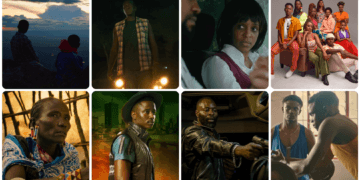
As East Africa’s first independent film fund, Docubox has supported over 150 films, with a focus on feature documentaries, documentary shorts and short fiction films.
Mbogo has been at the fund for seven of its thirteen years and in that time, she has watched the ecosystem it helped build begin to pay off. “We’ve seen the growth, and I do think Docubox has played a really big role,” she says. She traces the throughline from the capacity-building work and grants the fund has offered to the growing number of East African documentaries that have landed in major global spaces.
She reaches for evidence, and it comes easily: Sudan’s Khartoum and Kenya’s How to Build a Library premiered at Sundance in 2025; Softie (Kenya, 2020) won at Sundance and was an Emmy, Peabody and PGA Awards nominee; The Woman Who Poked the Leopard (Uganda, 2025) premiered at DOK Leipzig. There’s also No Simple Way Home (2022), the first South Sudanese film at Berlinale and The Battle for Laikipia (Kenya, 2024) at Sundance, with its producer Toni Kamau winning the Amazon Studios Nonfiction Producers Award.
Each title, Mbogo says, is proof that Docubox’s thirteen years of support has built not just individual successes but a kind of institutional confidence, a sense among filmmakers that a well-told story now has an actual pathway to a successful festival run, rather than disappearing into obscurity.
And that confidence extends past the festival circuit and back home to the local audiences the stories are made for. The Battle for Laikipia‘s theatrical run in Kenya began in November 2024 through February 2025, selling out in cinemas. For Mbogo, this is evidence that Kenyan audiences will show up for documentaries the way they show up for other forms of storytelling. “It is a very great space to be, just seeing the growth. And just continuing to do that, even with the new and emerging filmmakers,” she says.
That growth she describes so readily, the sold-out cinema runs, the festival premieres, the confidence built over the years, is precisely the frame she pushes back into when I raise the fund’s newest and surprising move: a pivot into fiction.
In May 2026, Docubox made its first-ever call for fiction feature development under the Creative Producers Lab 2026 programme. The fund has since selected seven Kenyan teams who, over the coming months, will take part in an in-person lab, receive virtual support from story consultants and script doctors, and connect with international partners, funders and industry stakeholders.
Mbogo rejects the word “pivot”. Docubox started as a documentary support fund but it has been quietly expanding its remit since 2018, when it began backing fiction short films. Omar Hamza’s short Sukari, a Docubox-supported title, was the most-awarded title at the 2026 Kalasha Awards in May, with six awards including Best Short Film and Best Original Screenplay.
“It’s not a pivot, it’s just the next level of growth to help build the industry,” she insists.
The move into fiction feature development, Mbogo explains, was a response to a need that could no longer be ignored. During Docubox’s inaugural International Partnership Summit in 2025, filmmakers expressed a desire for the kind of support for fiction features that the fund had long provided to documentaries.
Rather than a broad approach, the fund chose to start narrower, with development, not production, and specifically the development of creative producers who can move fluidly between fiction and documentary. The gap isn’t about genre, in Mbogo’s account, but about Kenya’s scarcity of producers who understand the business of film deeply enough to be trusted across formats.
“We don’t have that many creative producers in the country,” she says.
She believes building that capacity strengthens both sides of the fund’s work rather than splitting its attention. “I don’t think it will dilute what we do. If anything, it will just level up,” she adds.
In her view, the success of fiction can only uplift the whole East African filmmaking ecosystem, documentary included. And so, the fund’s new initiative on fiction feature development is simply the next stage of the same growth, not an exit but an extension. “We’re still supporting documentaries. We’re not letting that go,” she declares.
For Mbogo, Docubox is first and foremost a home for filmmakers; their needs come before any strategic pivot. That means keeping a hand on the pulse of what is actually missing in the industry at any given moment. She offers a concrete example: a post-production lab launched in 2025 after the team noticed how few strong story editors exist in the country to shepherd a film through its most vulnerable final stage.
Right now, distribution is the next frontier the organisation intends to tackle. Docubox has done impact screenings for years, but Mbogo wants that model to grow beyond community screenings into something filmmakers can actually earn from, which means a proper distribution pathway not just a visibility one. She’s careful to frame it as experimentation rather than a fixed plan: “trying to experiment with the different ways, but also ensuring that it goes back to what the filmmakers need.” Intimacy and reach, in her account, are sequential and one protects the former by staying responsive, and the latter follows if the infrastructure is built well enough to carry it.
At the Women in Film and TV Africa Gala and Awards in Zambia, Docubox’s win rested partly on Filamu Dada, a project that trained teams of women filmmakers, each following a woman in leadership, building directing and producing skills while surfacing a broader conversation about why women need to hold those roles at all. Mbogo admits though that the award was a recognition of something bigger: the thirteen years of funding, capacity-building, and audience-building that has fed into visible industry transformation. For her, it confirmed that the ecosystem Docubox spent over a decade building is now paying off, story by story, on the platforms that matter most.
For years, documentary funding across Africa has largely come from NGOs and development organisations, a model that has often rewarded issue-driven storytelling over character-driven cinema. Docubox has tried to push against that tendency by building its labs around character-driven storytelling.
“Because that’s simply what proves more impactful,” says Mbogo. “The guidance we give filmmakers starts with the questions: who is the character carrying this story, and how do you make them stand out enough to land with force? How do you find the character in the first place, and how does the story arrive?”
This commitment to story over messaging is also, in its way, about positioning – making sure the right people are in the room to see that story land, as Docubox aims to do with its International Partnership Summit on 17 and 18 July. The first edition in 2025 was held under Kibinge’s leadership; this year’s is the first under Mbogo’s.
“The premise of the summit from the start was to bring international partners to East African filmmakers rather than the reverse,” she says. “Flying anywhere else to Europe or America to meet funders is prohibitively expensive, and once there, local filmmakers are competing against the entire global filmmaking community for attention. The goal, both in 2025 and 2026, is to build a space where filmmakers can network directly with funders, festivals, and distributors on home ground, partly because there’s real curiosity abroad about what’s happening in East Africa.”
Mbogo describes the convening as a chance for international partners to actually experience the work being made, and for filmmakers to build relationships that outlast any single funding decision, so that even a film that isn’t picked up still leaves its maker with a relationship to carry into the next one.
This year, though, there is also an emphasis on distribution and co-production. The centerpiece is a lab for films already in post-production, meaning films that need festival and distributor access now, and bringing those partners into direct contact with the filmmakers gives everyone a head start before the films are even finished.
Alongside that, Mbogo is pushing hard on South-to-South co-production, partnerships among filmmakers across the Global South. She argues that collaboration could expand audiences, open new funding avenues, and tap into markets like Latin America’s sizable African diaspora. Her hope, five years out, is modest in phrasing but sweeping in scope: that East African films will be big in a country such as Brazil.
And if she were to achieve this, picturing the East African film ecosystem from those five years to a decade from now, under her stewardship, what would it look like?
Mbogo’s answer is every Kenyan filmmaker’s fundamental struggle: an industry “where Kenyans actually go to watch Kenyan films,” where a Kenyan title “competes for a seat against a Hollywood release, and wins that competition on its own terms.”
Beneath that lies something more foundational still: an industry where filmmakers can actually make a living from the work itself. “Where a film gets bought, gets distributed, gets paid for,” she says, so that the people telling these stories no longer have to take side jobs just to survive the gaps between projects.
It is a vision enormous in its implications. Thirteen years ago, Kibinge built Docubox on the belief that African stories deserved infrastructure. Mbogo inherited that belief and she has already spent a year and a half building towards it before the title on her door changed. What she is asking for now is simply the next stage of the same conviction, that the measure of an industry’s health isn’t just how far its films travel, but also whether the people who make them can afford to keep doing it. If Docubox’s first thirteen years were about proving East African stories belonged on the world’s screens, its next ten, in Mbogo’s telling, are about proving they belong, and can be sustained, right here at home first.
EDITOR’S NOTE:
All reporting, interviews, and reviews on Sinema Focus are protected under international copyright law and the Kenya Copyright Act, 2001. No part of this publication may be reproduced, rewritten, republished, or redistributed in any form by media outlets without prior written consent. For reprint or syndication inquiries, contact editorial@sinemafocus.com.
©️ 2026 Sinema Focus / African Film Press. All rights reserved.
Never miss a moment.
Get the latest stories from Sinema Focus delivered straight to your inbox. Subscribe to our newsletter now.