

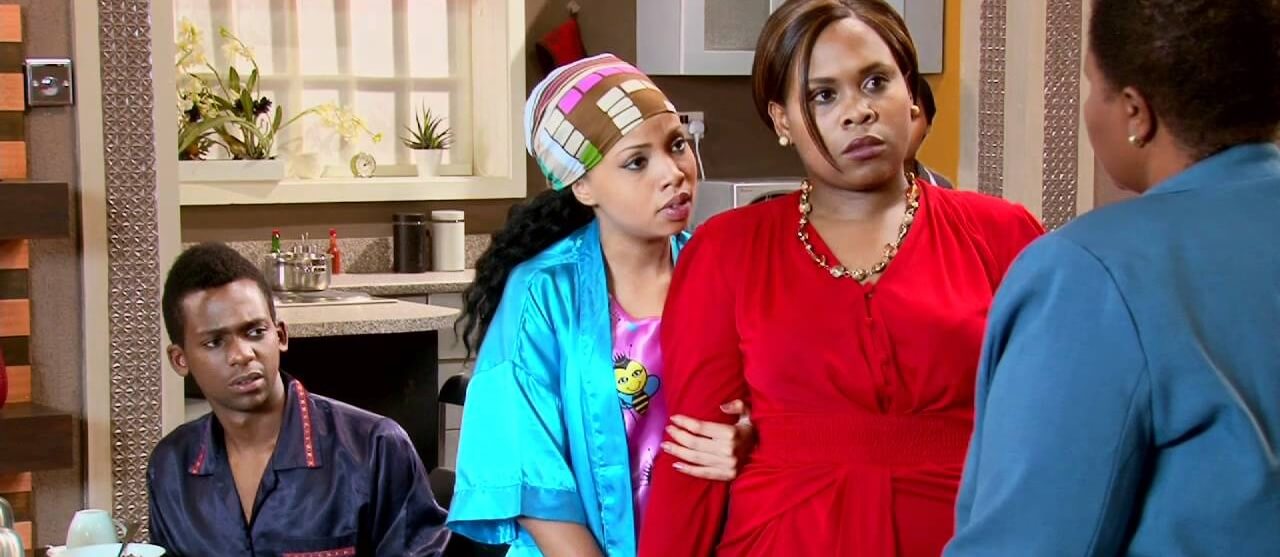
Nation Media Group (NMG) has lost its bid to stop the enforcement of a KSh320 million award to Al Is On Production (AIOP), the company behind Kenya’s 2011 popular soap opera Mali, after the High Court dismissed its application to set aside the award following an 11-year dispute over advertising revenue.
In a ruling delivered on 2 July 2026 at Milimani Law Courts, Justice Francis Gikonyo dismissed NMG’s application for lack of merit and allowed Al Is On Production’s application to have the award recognised and enforced as a judgment of the court.
Stay ahead of Kenya & East Africa’s film and TV.
Get our stories in your inbox — Subscribe to our newsletter now.
The dispute stems from a production agreement signed in May 2011, four months before the series went on air, and later varied in February 2012 under which AlOP produced 295 episodes of Mali for broadcast on NTV in Kenya and Uganda, and Kenya’s now defunct QTV. Under the agreement, NMG had exclusive control over the procurement, placement and broadcast of commercial advertising during the programme, subject to an agreed rate card.
Widely promoted as Kenya’s first soap opera, Mali was created by Alison Ngibuini, who also directed the series alongside June Ndinya (Prefects). The ensemble cast included Mumbi Maina (Nafsi), Mkamzee Mwatela (Lusala), Brenda Wairimu (Subira) and Daniel Peter Weke (4Play) in a story about succession battles and corporate drama that erupt within a wealthy polygamous family after the death of its patriarch.
Although viewership figures were never publicly disclosed, Mali was one of Kenya’s most-watched series during its run, occupying a prime-time slot on NTV and becoming one of the broadcaster’s flagship local productions.
According to the ruling, AIOP became concerned that advertisements were running during the broadcast of the series but the revenue reports provided by NMG only reflected sponsorship income from Nivea. Ngibuini, Mali’s producer and founder of AIOP, subsequently commissioned independent assessments by Ipsos Limited and Reelforge Systems, which indicated significant differences between the broadcaster’s figures and the advertising revenue generated during the programme’s run between 2013 and 2016.
After attempts to resolve the matter failed, the dispute was referred to arbitration in October 2015 under the parties’ agreement. During the proceedings, the arbitrator issued several orders directing NMG to produce reconciliation logs, invoices and a full account of payments made to AIOP. An independent expert was later appointed by consent of the parties to audit and verify advertising spots during the broadcast of the series between 2011 and 2016.
The arbitrator ultimately found that NMG had breached the agreement by failing to provide the required revenue records despite repeated orders, drawing an adverse inference from that failure before issuing a final award in favour of AIOP in March 2025.
The award, which totalled approximately KSh320 million, was broken down as follows:
- KSh160.55 million in revenue due to AIOP, with simple interest at 12% from 18 July 2019 until payment in full.
- KSh25.32 million for independent assessor costs, with simple interest at 14% if not paid within 30 days.
- KSh4.38 million in arbitration costs, with simple interest at 14% if not paid within 30 days.
- KSh4.55 million in taxed party-and-party costs, with simple interest at 14% if not paid within 30 days.
Claims for aggravated, exemplary and punitive damages were dismissed.
In June 2025, NMG challenged the award, arguing that the arbitrator had acted unfairly, failed to properly consider its evidence and reached a decision that conflicted with public policy.
In the ruling on 2 July, Justice Gikonyo rejected those arguments, finding that the arbitrator had considered the cases presented by both parties, evaluated the evidence before him and provided reasons for rejecting NMG’s position. The judge further held that the broadcaster had failed to demonstrate any breach of procedural fairness or any basis for the court to interfere with the arbitral award under the Arbitration Act.
The decision means the award can now be enforced as a judgment of the High Court, marking the latest chapter in one of the longest-running commercial disputes involving a Kenyan TV production. It also stands as one of the most significant legal decisions affecting Kenya’s film and TV industry since the Court of Appeal’s landmark censorship ruling on Rafiki in January 2026.
EDITOR’S NOTE:
All reporting, interviews, and reviews on Sinema Focus are protected under international copyright law and the Kenya Copyright Act, 2001. No part of this publication may be reproduced, rewritten, republished, or redistributed in any form by media outlets without prior written consent. For reprint or syndication inquiries, contact editorial@sinemafocus.com.
©️ 2026 Sinema Focus / African Film Press. All rights reserved.
Never miss a moment.
Get the latest stories from Sinema Focus delivered straight to your inbox. Subscribe to our newsletter now.