

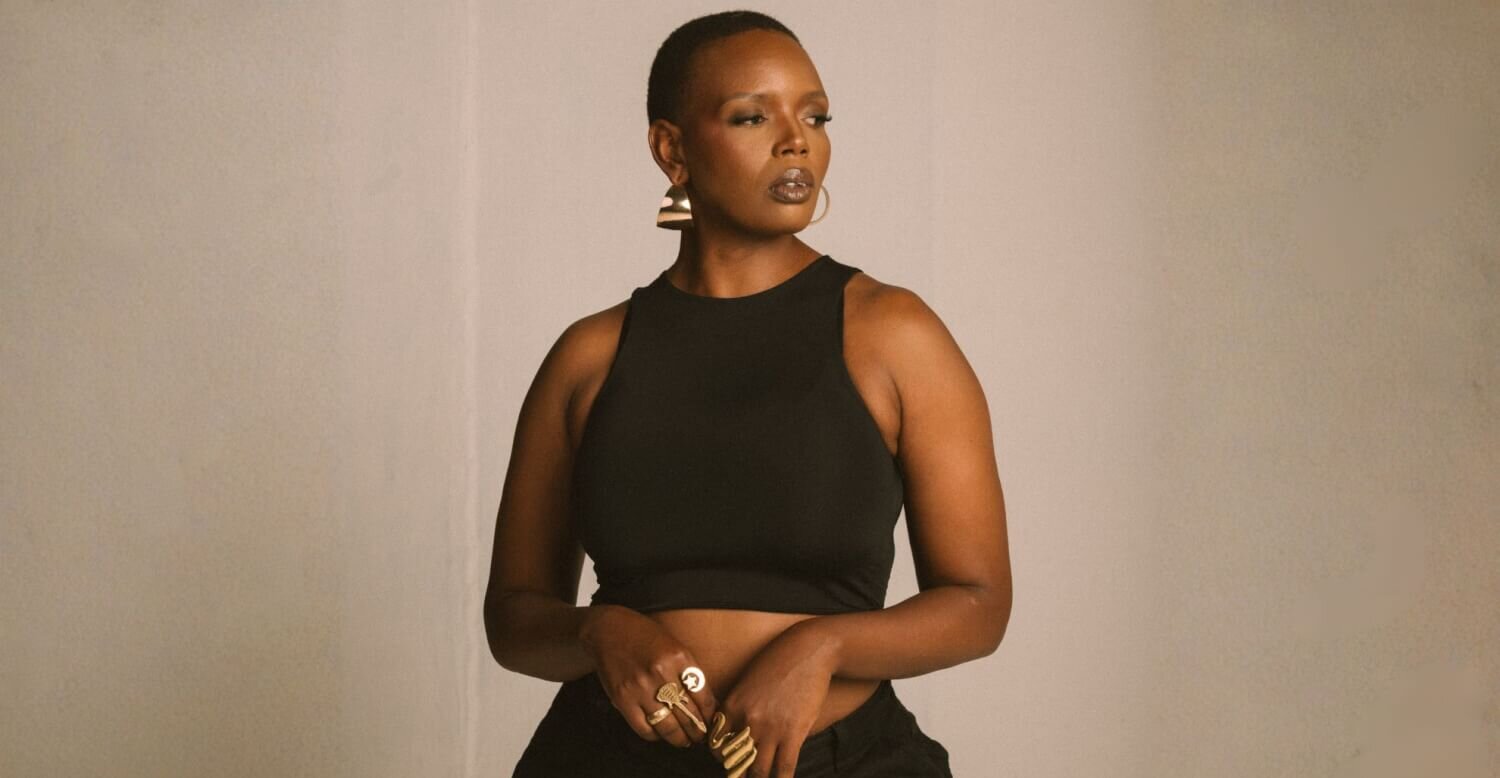
There’s a certain kind of artist who rises by accumulation. The stubborn gathering of craft, life bruises and instincts alongside. Gathoni Kimuyu is one of those of the long game, as fifteen years inside Kenya’s theatre, film and TV industry have sanded her into something more than just a multi-hyphenate. Silently powerful, and utterly indispensable, Gathoni has hovered in multiple creative spaces. She has helped shape initiatives such as Too Early for Birds, the theatrical juggernaut that retells Kenya’s history in pieces so jagged and alive that they feel plucked from our collective blood.
She has also threaded character through the domestic heat of the female-led Philit Productions’ series MaEmpress, and previously grounded youth narratives in the classic Machachari, building a reputation as the sort of practitioner a country should learn to invest in, and the artiste whose respect is earned audience by audience, not manufactured by hype. The result is that she is now famously known as “Queen Gathoni”, an honorific that seems to follow her through rehearsal rooms, productions and digital corridors alike.
Stay ahead of Kenya & East Africa’s film and TV.
Get our stories in your inbox — Subscribe to our newsletter now.
In high school, a principal once told them that the names we choose end up training the world on how to address us. Years later, while setting up a Twitter account, that memory resurfaced and the moniker “Queen Gathoni” was born. It had a clean, confident ring to it. So she typed it in and never looked back. The world, predictably, did what it does best: it took her casual choice and crowned her with it.
That title arrives with the kind of casual bravado teenagers invent without realising they are chiseling their own lives and ambitions. But in hindsight, it feels fitting for the woman who adopted it, as she has lived several artistic lives: producer, performer, chronicler of worlds. And if she was one to identify the thread that binds all these versions of herself, she says, “Screenwriting has been one of the things that holds my journey together”. Then, with the matter-of-fact certainty of someone who has excavated her own craft long enough to know its bedrock: “At the heart of it all, I’m a storyteller.”
Even her work as a producer is really a form of narrative engineering, the architecture of a story, the instinct for what needs to be said and how it should be shaped. “Storytelling is my guiding principle, the backbone of all my work.”
It’s a centre the industry has begun to recognise. Named Producer of the Year at the 2024 Kenya Theatre Awards, Gathoni now stands at the unsteady heart of the country’s artistic ecosystem, watching it unfurl and insist on itself. From her vantage point, Kenyan theatre is not a corpse gasping for relevance nor a miracle blooming overnight but something more fragile and earnest. “I think it still has a long way to go,” she admits. “But it’s doing really well. We’re at a good place where a lot of people are doing amazing things.” The Kenya Theatre Awards, she adds, have sparked a subtle competitiveness, the good kind. “They’ve encouraged people to do better shows, to stage better plays.”
Her optimism extends beyond the present that has seen a resurgence of Kenyan theatre post COVID-19 as a medium far more vibrant, and far more daring than film or television. “The future of Kenyan theatre is really bright,” she says. “We have a lot of new talent in the industry right now, which means that we’re going to see another shift of storytellers come into the market, which is an amazing thing. That means more work for the industry.”
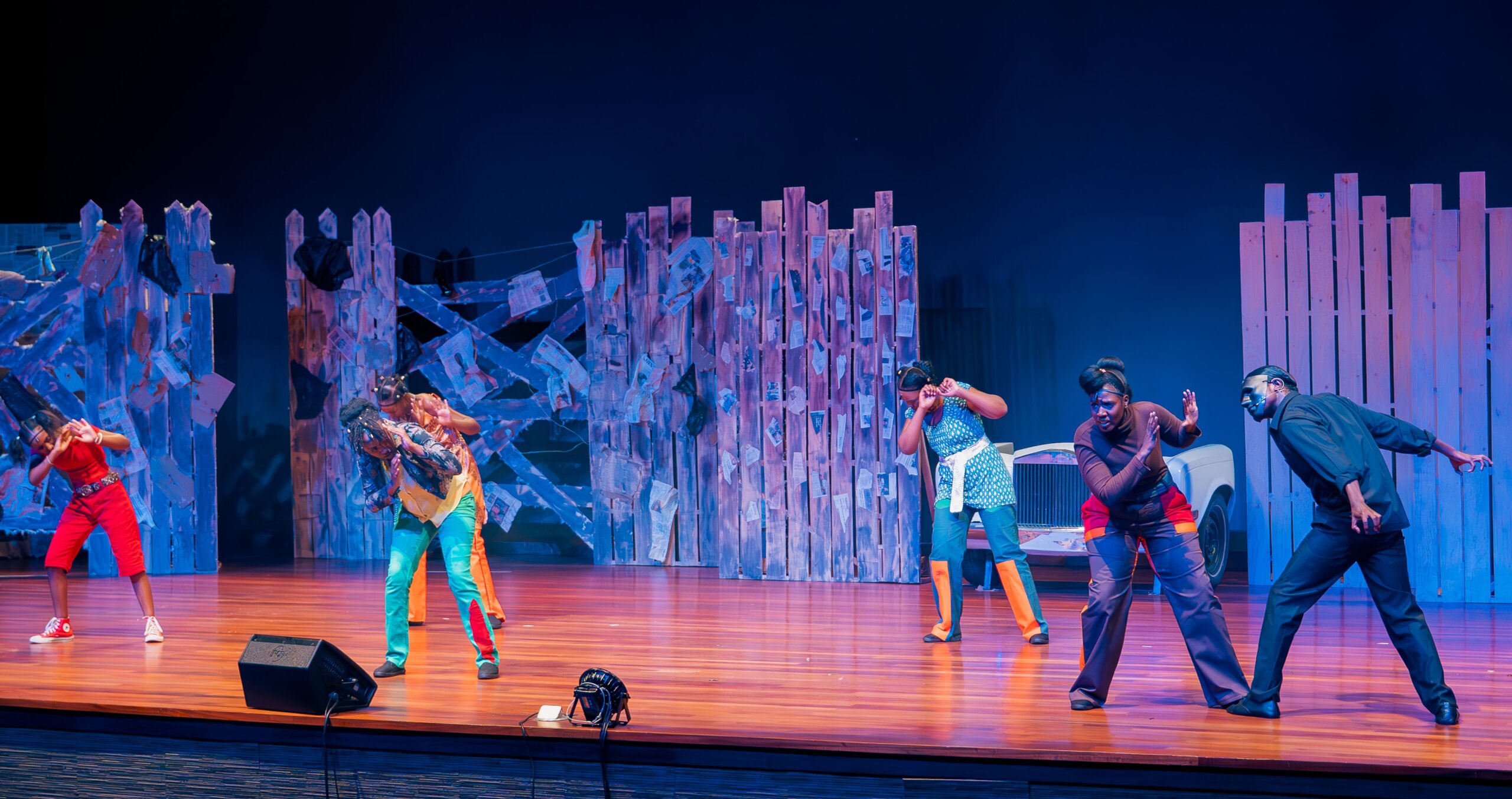
Under the collective Story Zetu, Too Early for Birds, one of Gathoni’s biggest accomplishments, began as a theatrical experiment, and has, almost in spite of itself, swollen into a movement: a business model, a cultural intervention, with a big fandom that has consistently sold-out auditoriums, inspiring a new wave of equally ambitious goals on stage. Gathoni remembers the early days of producing for Too Early for Birds, when theatre marketing amounted to little more than friends whispering to friends, shows filled with the same familiar faces. “One of the things Too Early for Birds and Story Zetu have done is change that, especially because we marketed online very heavily. That meant we had a chance to talk to a new audience that had never seen theatre before,” she says.
The shift was also ideological. By dragging Kenyan theatre out of its cozy echo chamber and hurling it into the digital commons, Gathoni and her collaborators rewired the idea of who theatre is for. It is the kind of change that looks obvious in hindsight but required someone stubborn enough, and imaginative enough, to insist that the national stage should belong to the nation.
In 2025, Gathoni is finally stepping into the full glare of the spotlight with a story more personal than anything she’s ever been involved in. Her new play, Free Me, set to be staged from 28-30 November at Jain Bhavan auditorium promises a reckoning. It is drawn from her own life, and is a testimony to survival after a previous marriage became a crucible of domestic abuse.
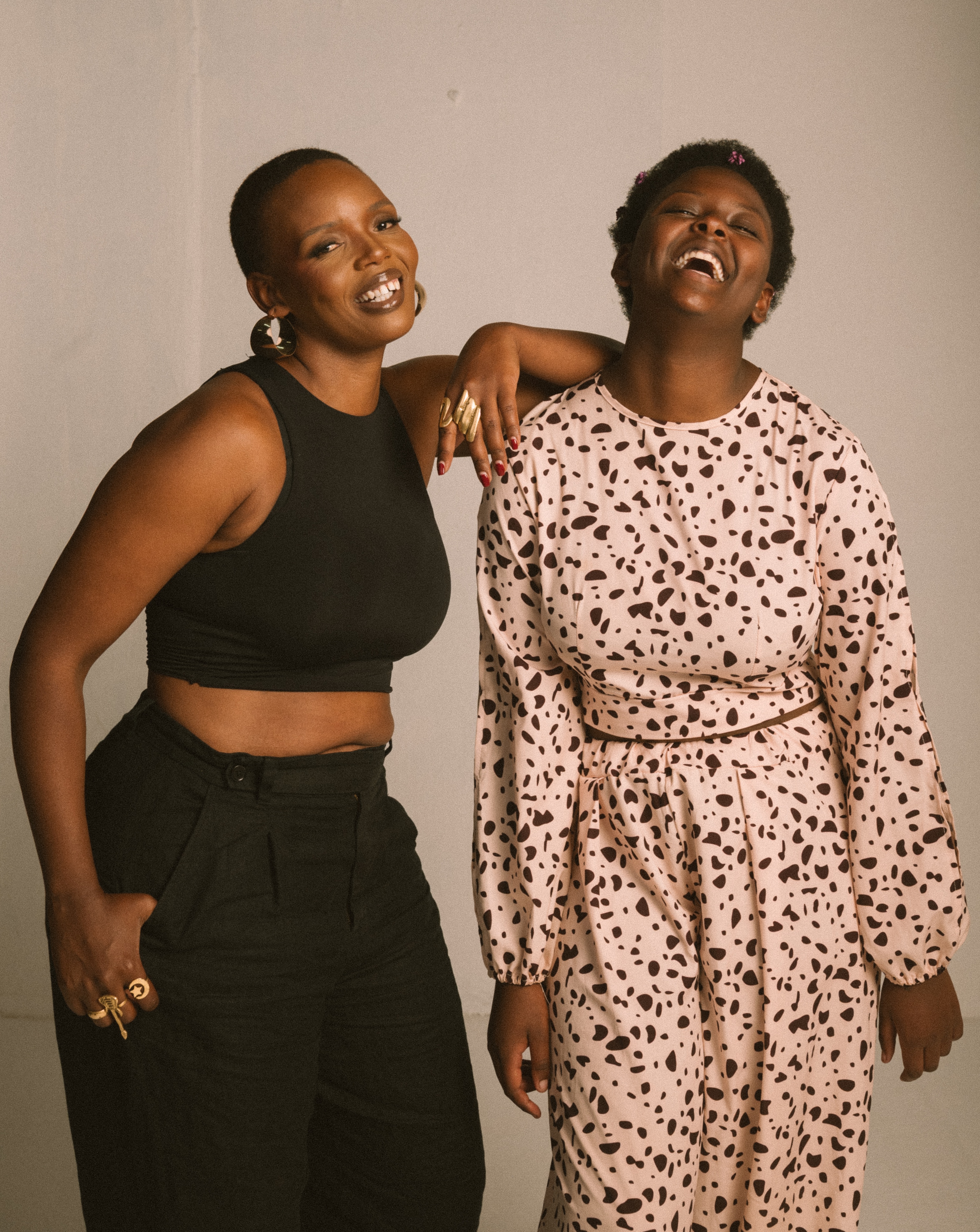
Going through her X (formerly Twitter) feed, Gathoni has spoken of this violence before, and continues to speak of it, how as a new mother, she finally decided to walk away, with her child in her arms and only $2 to her name. Just recently she shared: “My 20s damn near killed me.”
For a woman who has been the architect of other people’s histories, what has finally compelled her to drag her own history onto the stage is far beyond just storytelling. It’s driven by necessity, and by the grim realities of gender-based violence that women in Kenya continue to grapple with. And it’s no coincidence that the play will be staged during the 16 Days of Activism Against Gender-Based Violence, a period globally dedicated to raise awareness and end violence against women and girls everywhere.
According to a 2022 survey by the Kenya National Bureau of Statistics, 45% of women aged 15–49 have experienced physical violence, with the main perpetrators of physical violence being husbands or intimate partners. On the other hand, femicide was at an all-time high in 2024, according to a report by Odipo Dev and Africa Uncensored.
It’s been fifteen years since Gathoni made the decision to leave her abusive marriage. “The numbers of abused women have not changed. In fact, they have gotten bigger,” she says. “At the point I am in my life and within the industry, it is a good time for me to use my voice for change, and even as a healing process for myself. This felt like the perfect time to tell my story.”
She insists she is not doing confessional theatre for spectacle’s sake but out of a survival that insists on its place in the light. It’s the kind of conviction she won’t back down from, even as she reveals on X that she’s currently receiving death threats from her abuser. “Victims of gender-based violence have been silenced and shamed for too long. You won’t silence me though, even in my death, my story will remain alive and loud,” she shared on Friday.
Gathoni also re-affirms that telling this story hasn’t in any way altered her relationship with her audience but has actually reconfigured it. “My audience and I have gotten closer,” she says. “This type of story is very vulnerable, so it means I have to constantly open myself up.” Vulnerability, for her, is no romantic gesture, but the daily reopening of wounds she would rather let scar over. But she’s not walking alone. Her friends and family, she notes, are her biggest cheerleaders. “They are holding me and holding my hand as I walk this journey.” Her daughter, especially, just a baby when she left her marriage, is proud that this truth is being spoken out loud. And still, Gathoni admits it has not been easy. “Most of it means that I am reliving those moments, and they are traumatic moments, but they have to be told. Somehow, we have to heal.” There’s no melodrama in her voice, only a clear-eyed recognition that the stage can mend.
Preparing to stand onstage with that kind of naked truth required a private, almost monastic discipline. “I have had pep talks with myself,” she says. Before she announced Free Me, she sat alone for long stretches, thinking, writing, journaling, interrogating her own psyche the way a director interrogates a final draft. These small rituals became the emotional scaffolding holding her steady as she stepped into the glare. And when people come to see Free Me, she is not interested in leaving them with pity or spectacle. She wants recognition. Connection. A mirror of sorts. “This story doesn’t just contain the gender-based violence part,” she says. “It also contains parts of my teenagehood, my 20s, and my current life.” What she hopes the audience walks away with is simple: healing and growth.
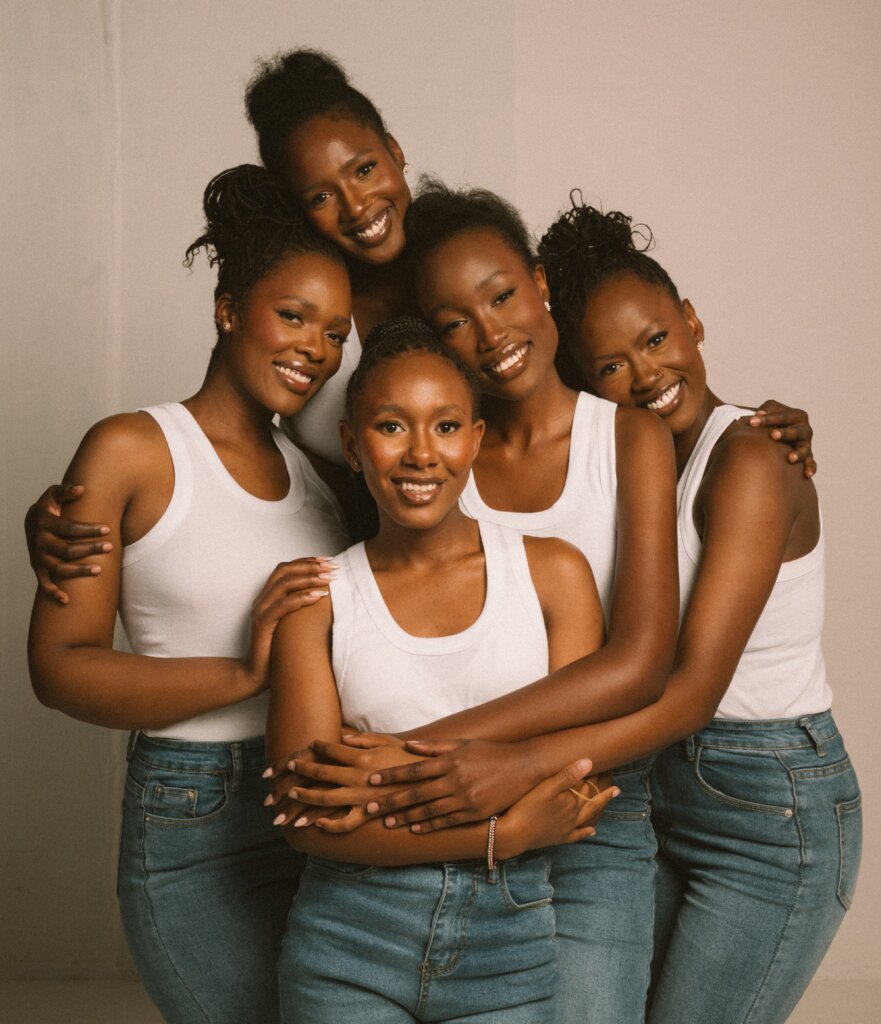
Actors Nungari Kiore (Jiji), Renee Gichuki (MTV Shuga Mashariki), Gathoni Mutua (Single Kiasi), Joan Cherono and Ellah Maina (Adam to Eve) will take the stage as Gathoni in the one-woman play, with one actor performing at each of the five shows playing this coming weekend.
Gathoni wanted new faces to embody her on stage, what she calls “the next generation” of actors, like newcomers Gichuki and Cherono. “And someone like Nungari has never been on stage before, and Ellah has been on TV more than stage,” she says, also pointing out that Mutua, the most established actor of the five, hasn’t been on stage in 10 years.
When she looks at the broader Kenyan landscape, the tangle of gender, power, silence, and community, Gathoni sees an industry still flinching from its own hard truths. “We’re afraid because we are shamed,” she tells me, almost as a matter-of-factly, as if naming the thing steals a bit of its power. Stories that carry the weight of GBV arrive already draped in silence as they come with a kind of embarrassment, and a cultural reflex to look away. This might be why so few artists reach for them, and why she still feels a swell of gratitude that Mugambi Nthiga stepped forward to direct Free Me. “Art needs to be a little bolder,” Gathoni insists. “We need stories where art becomes activism, because we need them more than we admit.”
Beyond the stage and beyond this moment, when I ask her about the project or life-shift she’s been orbiting, the one she hasn’t yet said out loud, she says she wants to return to the screen afterwards. Not in the gauzy someday of wishful thinking, but with the deliberate certainty of someone finally admitting they deserve the horizon they have been circling. “That’s what’s in the works for 2026,” she says.
One has to admit that there is something almost defiant about Gathoni Kimuyu’s steadiness and resilience. In an industry that rewards the loudest, she has chosen precision. In a culture that loves shortcuts, she has insisted on craft. The result is a body of work that feels more like a map, charting where Kenyan storytelling has been, and hinting where it might dare to go next.
EDITOR’S NOTE:
All reporting, interviews, and reviews on Sinema Focus are protected under international copyright law and the Kenya Copyright Act, 2001. No part of this publication may be reproduced, rewritten, republished, or redistributed in any form by media outlets without prior written consent. For reprint or syndication inquiries, contact editorial@sinemafocus.com.
©️ 2026 Sinema Focus / African Film Press. All rights reserved.
Never miss a moment.
Get the latest stories from Sinema Focus delivered straight to your inbox. Subscribe to our newsletter now.









#endGBV forever,kudos @queen gathoni for the idea that will touch the heart of many,I’m an upcoming artist actually new in the industry incase of any project plz 0769169868