
I love African cinema. I especially love coming across a film from an African country I have not consumed any cinematic media from. Unlike many foreign films, regardless of their quality or the truths they hold, African cinema – left to breathe in its natural state – always introduces me to someone I know. It could be someone we have seen before, or had a conversation with, or most intimately, someone we are growing into.
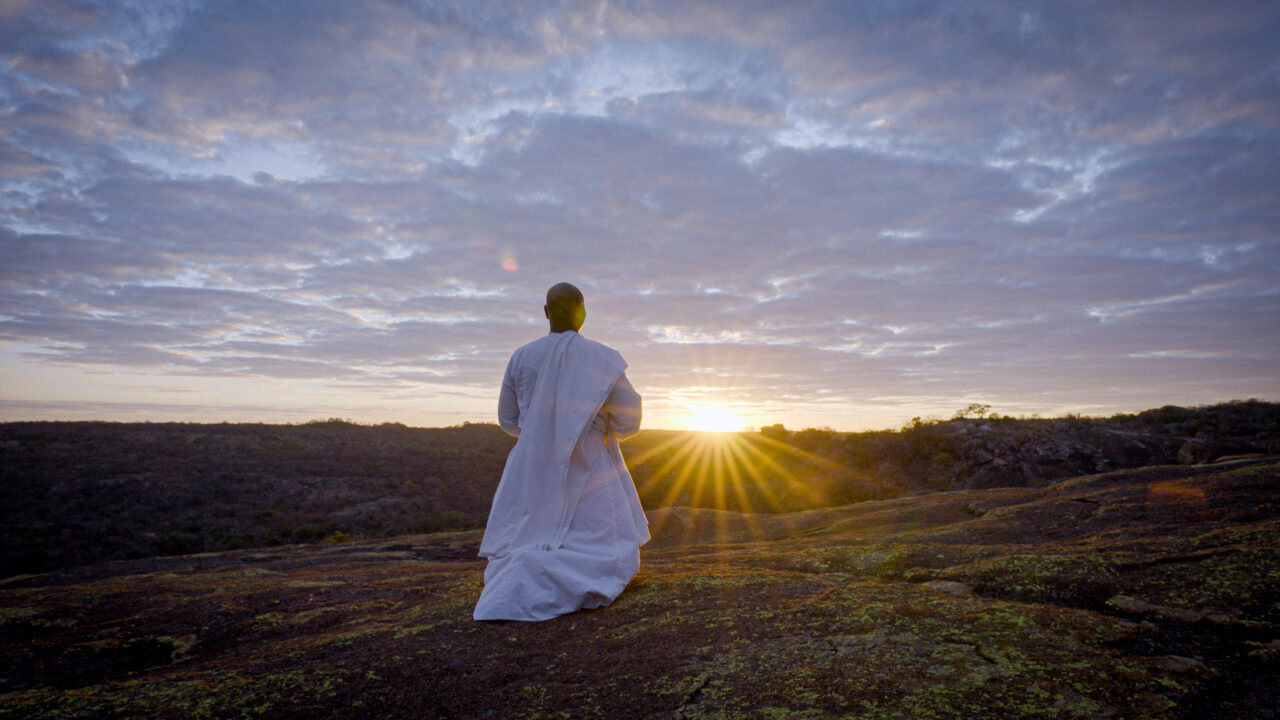
Matabeleland, a documentary produced by Sam Soko under the firm clasp of Nyasha Kadandara as both director and cinematographer, reintroduces us to people who are as African as they can be – tied to history, family, and personal struggles that most, if not every African, must contend with at some point.
Stay ahead of Kenya & East Africa’s film and TV.
Get our stories in your inbox — Subscribe to our newsletter now.
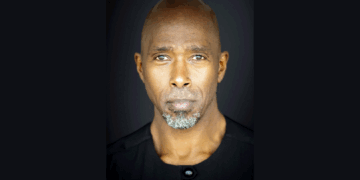
The story follows Chris Nyathi, a 60-year-old Zimbabwean immigrant as he criss-crosses between Zimbabwe and Botswana. On one side of the border, his humongous family of forgotten children and missed calls of responsibility beckon him under the weight of a personal motivation to rest the soul of his father – a victim of Robert Mugabe’s Gukurahundi genocide. On the other side, he tries to branch into new beginnings that seem stifled by economic chains and the debilitating withdrawal that crops around it.
Over the course of 70 minutes, Matabeleland peels through one man’s inner turmoil, revealing layers of the political dichotomy that broke a country, the masculine tribulations of fatherhood and love, and the spiritual soul of a society that – be it by choice or tradition – is forced into wearing the trauma of a fading past into its present.
If the film has a fault, it’s only that its little bursts of rich, condensed context – which carry the consciousness of its characters with perfect rhythm – come so fast and leave before they can fully embellish. One minute I was bursting out laughing watching a father try to count all his children, nd a few minutes later, locked into unearthing a history of the early independent years of Zimbabwe that I wasn’t even aware of. I would have wished for another hour or two of this film, simply because the way it was shot, the editing, the music, and the intimacy it shows in both its subject matter and its flawed characters, blend so effortlessly.
In between the shimmering rituals of orthodox African religion that silently directs an aging man in a foreign country – recounting to his neighbour the story of Jacob returning to be buried in his own land, as he wishes the same for his own father – to a present, yet emotionally distant father asking his children for their birthdays. Matabeleland, in these instances, silently holds firmly at a distance, never judging or presuming intent – capturing both the wandering thoughts of responsibility and detachment that can become second nature over time.
But Matabeleland’s deepest offering is that at its core – tucked within the bruising of the outside world – it captures the simple inner dialogue of a radiantly matured relationship that no scripted drama could rival. Using her camera as some form of instigating muse, Nyasha’s voice and presence is acknowledged within the film as an internal monologue of questions piercing through what would otherwise be the silence of familiarity between two souls. In opening up the emotional inertia holding back Dumi, a bubbly woman catering to the whims of a withdrawn, older partner, the film sets itself apart – beyond conventional documentary – and becomes something straight from Fleabag or Abbott Elementary. Charming and lingering just enough to squeeze in the nuance of unarticulated emotions, the film builds with genuine humour and candid adulation, a love story of its kind between Chris and Dumi.
Matabeleland delivers everything it sets out to do – making an hour of viewing feel like a lifetime of recognition. The ambiguity it shows as it drifts across the many and often conflicting strands of its main character’s life creates an air of objective immersion that educates, entertains, and questions – while at the same time delivering the snippets of a real-life soap opera I could watch seasons of.
Matabeleland had its African premiere at the 2025 Encounters South Africa International Documentary Festival. For its Kenyan premiere, Matabeleland screened at the 2025 NBO Film Festival that ran from 16-26 October.
EDITOR’S NOTE:
All reporting, interviews, and reviews on Sinema Focus are protected under international copyright law and the Kenya Copyright Act, 2001. No part of this publication may be reproduced, rewritten, republished, or redistributed in any form by media outlets without prior written consent. For reprint or syndication inquiries, contact editorial@sinemafocus.com.
©️ 2026 Sinema Focus / African Film Press. All rights reserved.
Never miss a moment.
Get the latest stories from Sinema Focus delivered straight to your inbox. Subscribe to our newsletter now.