
African cinema has never lacked stories of vulnerability, but too often it has lacked the space to tell them on its own terms. Behind headline narratives of conflict, resilience and survival sit intimate reckonings that rarely make it to the screen. It is in that space that The Ones with the Tempered Flowers finds its footing.
The Tanzanian-Kenyan co-production has been selected for Locarno Film Festival’s Open Doors 2026, joining a slate of other African projects in the second year of the programme’s Africa-focused cycle. Before that, the film had gone through development at LBx Africa and at the Berlinale, where it continued to build momentum. Each stop has sharpened the same premise, distilled from something almost unbearably personal into something that insists on being shared.
Stay ahead of Kenya & East Africa’s film and TV.
Get our stories in your inbox — Subscribe to our newsletter now.
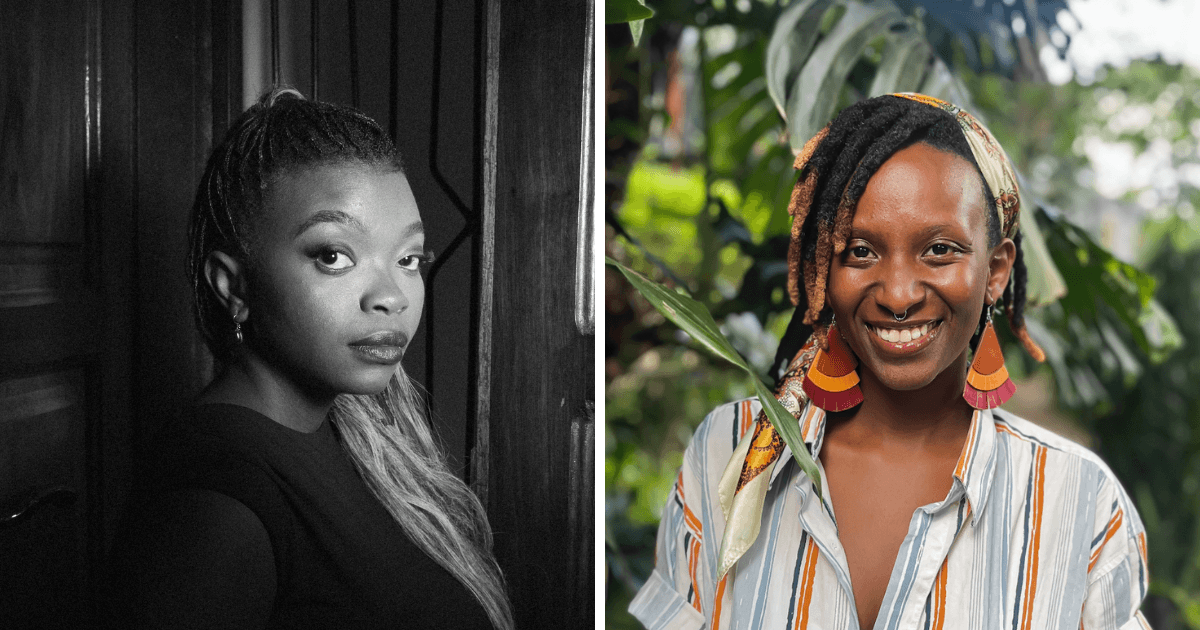
That premise belongs to Neema Ngelime, the Tanzanian director whose own medical diagnosis — the possibility that she may never have children — became the seed of the film. Meet her mid-conversation and you get the sense of someone who has worked out loud how to hold a private crisis in public hands. Producing alongside her is Ivy Kiru, the Kenyan producer who shares Ngelime’s inheritance of what it means to be a woman in East Africa.
Ngelime takes me back to the moment of diagnosis itself, the strange double consciousness of being told what was wrong with her body while watching it happen on a screen. “I was like, ‘Oh, this is visually stunning.’ My body is visually stunning inside. It would look nice on cinema. It bothers me, but not so much,” she recalls. It’s an admission that sits at the exact center of the film’s tension: the pull between clinical fact and aesthetic instinct, between what should devastate her and what, instead, made her start thinking like an artist.
For Kiru, the overlap was obvious from their first conversation. “Tanzania and Kenya, we are really similar,” she says. “The moment we started getting to know each other, it was clear that this is exactly what we are experiencing here too. We are in a patriarchal world society in general. Whether I am talking to a woman from Europe or here, it’s all the same. Once you hit a certain age, these are the conversations you’re going to have.”
The Ones With the Tempered Flowers is a hybrid project woven through staged reenactments and images of Ngelime’s own body: clinical scans from the hospital visits that started it all, repurposed as a visual language for cycles and fertility. Its non-linear structure stretches from a 1990s Tanzanian childhood to the contradictions of adulthood today, weaving old family archives with modern digital footage.
But Ngelime admits it is not fully written yet. “We are still developing the film, and it is on paper, but we are moving. One element ignites the other based on where the conversation goes. I like to think this film is a fever dream,” she says, “but a beautiful fever dream” – cyclical, the way birth and death are cyclical, the way anxieties feed into one another, folding a woman’s attempt to process her own body into something closer to a visual and sonic loop than a straight line.
Underneath that fever-dream logic sits something more universal: the pressure placed on a woman’s body once she reaches a certain age. “You walk into a room, and everyone just wants to know. You are already a biological clock, and people get really upset when you don’t.” But Ngelime is careful not to overpromise a resolution with the project. “The question of resolution would be answered really well if the film was done,” she says. For now, she’s letting the fever dream run its course, trusting the form to catch up to the feeling.
Talking to the two filmmakers, it soon becomes clear that if the film itself is Ngelime’s domain, its path into the world belongs largely to Kiru – and to the increasingly familiar circuit of labs, markets and mentorship programmes African filmmakers now have to navigate to get a project financed.
“Most of the financing is always attached to a lab,” Kiru says. “We have to be in that system.”
According to her, the payoff is as much about visibility and education as it is financing: learning how to approach a European co-producer, which doors exist beyond soft financing, and how one credential can open the next. By the time a project reaches Locarno, it rarely arrives cold.
“These labs know us now, and these festivals know us. It is much easier to get in once you’ve been in the market routes,” Kiru says. “There is this filmmaker called Neema in Tanzania who has a film, that’s how the industry starts talking about you. It’s built lab by lab.”
Ngelime, for her part, is clear about what the process has done to her voice. “The more I am in labs, the more I evolve in confidence. You take what you can, and some things you don’t.”
What has shifted most, she says, is scale. Where once she was thinking in intimate, local terms, now she’s able to think internationally, surrounded by players from different countries and professions.
But her perspective has also shifted. “One surprise that has stuck with me is that we thought we were doing this for women, but men do have stuff to say too,” Ngelime says. “A film built around one woman’s body and diagnosis has sparked a conversation neither of us expected. It has been beautiful every time.”
The Ones with the Tempered Flowers has been Kiru’s long game, a project she has helped nurse from an intimate premise into an internationally mentored production. But 2026 has also handed her a milestone entirely of its own. Weeks before Locarno, Kiru represented Kenya at the Cannes Film Festival, pitching Lydia Matata’s feature project Strong Wind (Pepo Kali) through La Fabrique Cinéma, one of the industry’s more selective development platforms.
It raises an obvious question for a producer running her own outfit, AQ Pictures: how does she champion two high-profile, deeply personal narratives at once without either director’s voice getting lost in the process?
“I am here to support Neema’s vision,” she says. “At the end of the day, I am her buffer, and I am her supporter. My job is to hold this bubble of creativity and just keep holding it as it is and take it to the finish line. My own creative instincts are in service of amplification rather than authorship. I do come in creatively, but at the end of the day, not to bring my voice into it but to amplify Neema’s voice. That is my goal.”
Whatever fingerprints a producer leaves on a project, Kiru maintains that “films are directors’ films.”
“And this one in particular is not just Neema’s film, but Neema’s story,” she says.
If you pull back from the specifics of The Ones with the Tempered Flowers, both women are, in their own ways, describing something bigger than a single film. As a Kenyan producer involved in Tanzanian and pan-African storytelling right now, Kiru has a particular vantage point on a moment of real momentum.
“The industry is growing fast. It is beautiful to see how many more independent stories and producers and filmmakers are coming out of the continent,” Kiru says. “There is a lot of attention now for African content as well, and that attention only gives us more pressure to make better films and have more films and more ideas, which is amazing.”
Despite the questions often raised about overreliance on Western funding and institutions, for Kiru, the momentum is even more apparent when measured against where the industry was just a few years ago.
“There is always that fallback that we still have a long way to go because there is so much reliance on the outside, and there is still so much we need to do. But measured against where things stood even six years ago, we can see the growth,” Kiru says. “So many more films are going international, and more audiences are interested in our stories. What we need to look at now is how to create our own ecosystems within the continent so that we don’t have to rely on the West for some of these things.”
For Ngelime, co-productions like The Ones with the Tempered Flowers prove that some of these ecosystems are already taking shape.
“I honestly think it’s a very good time to be Pan-African, not just East African. The old bottlenecks are loosening,” she says, pointing out that Tanzanian filmmakers previously had to do some aspects of production in Kenya. “This has changed. There is room for healthy synergies between the two countries, helped along by Nairobi’s role as a regional training hub.”
Ngelime says this has helped cultivate a community where connections eventually become colleagues and collaborators. “I do see that as something that will probably continue to happen.”
As for what audiences can expect from The Ones with the Tempered Flowers, for Kiru, it comes back to conversations, specifically the ones her own family has never quite had.
“We never really have intergenerational conversations, and I think those are the most important ones,” she says. “We talk a lot with our peers, but never once do we really question why our moms and dads did certain things.”
The film, she says, has already started doing that work for her personally. “What I hope for audiences is the same reckoning, not just across generations, but genders. I think the film cuts across all that, which is fantastic.”
Ngelime’s hope is, in some ways, even more personal.
“Long before this diagnosis, my instinct as an artist was always to make ordinary people magical,” she says. “Making this particular film flipped that instinct back on itself. My family morphed into their ordinariness, and it has now made me see how magical that is.”
That shift has come with an unexpected gift: the production has already outlived some of the very people it set out to document. “It is so beautiful that I get to have an archive. Not many people get to say that.”
And if the film does nothing else, Ngelime hopes it nudges others toward the same instinct: to “encourage more Africans to actively engage in archive-making, of their family and of themselves.”
EDITOR’S NOTE:
All reporting, interviews, and reviews on Sinema Focus are protected under international copyright law and the Kenya Copyright Act, 2001. No part of this publication may be reproduced, rewritten, republished, or redistributed in any form by media outlets without prior written consent. For reprint or syndication inquiries, contact editorial@sinemafocus.com.
©️ 2026 Sinema Focus / African Film Press. All rights reserved.
Never miss a moment.
Get the latest stories from Sinema Focus delivered straight to your inbox. Subscribe to our newsletter now.