
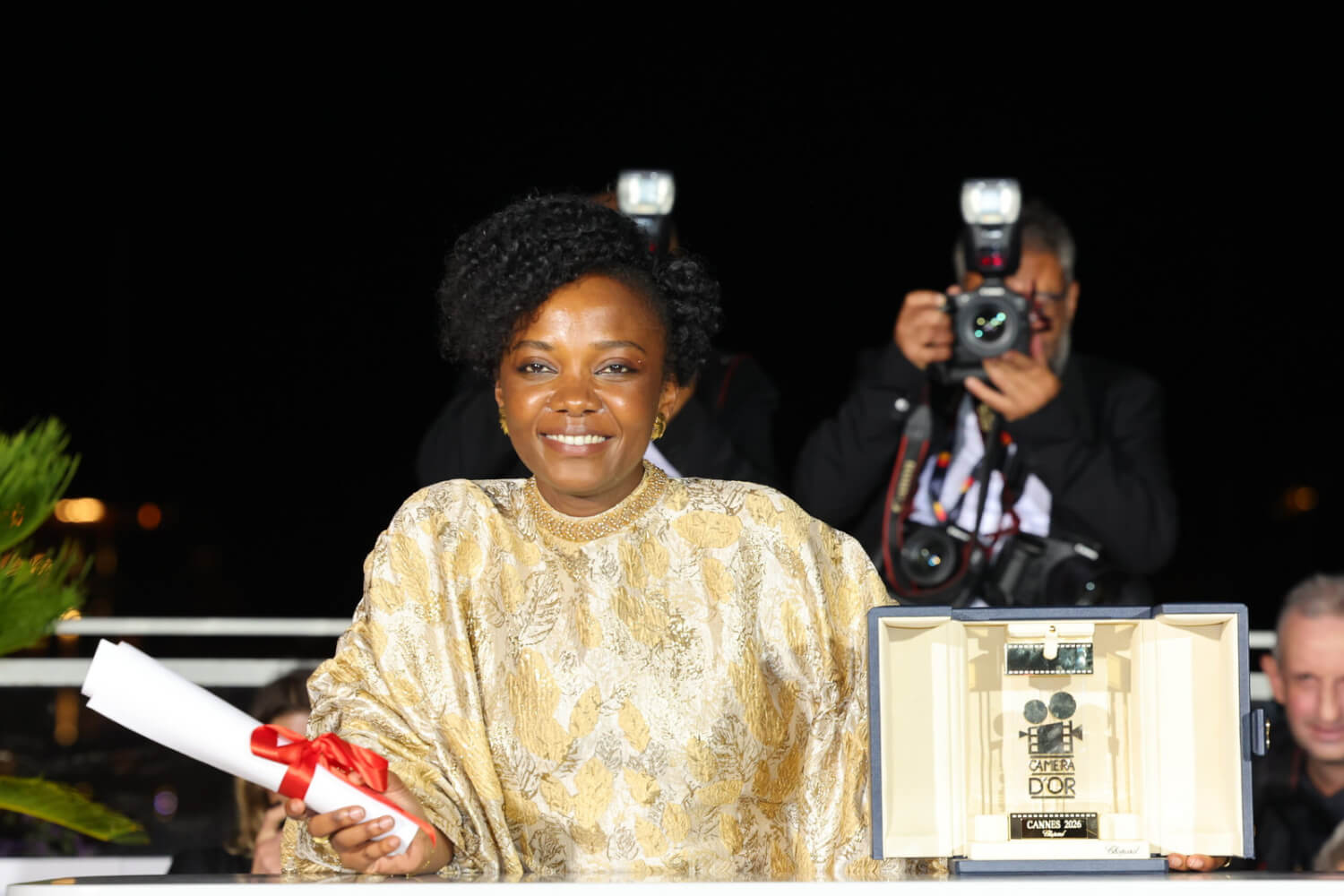
Rwandan filmmaker Marie-Clémentine Dusabejambo made history at the 79th Cannes Film Festival when her debut feature film Ben’Imana won the prestigious Caméra d’Or, awarded to the best first feature film presented across all sections of the festival where this year 23 debut feature films were vying for the award.
The film also received the FIPRESCI Prize from the International Federation of Film Critics, placing it among the most critically acclaimed films of the year and firmly positioning Rwanda on the global cinematic map.
Stay ahead of Kenya & East Africa’s film and TV.
Get our stories in your inbox — Subscribe to our newsletter now.
The recognition marks a defining moment for Rwanda and for African cinema as a whole, with Ben’Imana becoming the first feature film from the continent to be awarded the Caméra d’Or. Last year, Nigeria’s My Father’s Shadow received a special mention for the award.
Even before its Caméra d’Or win, Ben’Imana had already made history. It became the first film by a Rwandan director to premiere in the Cannes Official Selection, screening in the Un Certain Regard section.
During her acceptance speech for the Caméra d’Or, Dusabejambo said, “I made this film because I wanted to pay tribute to the women of my country, those mothers who are at the roots of an entire nation’s healing. Those mothers who, through error and unspeakable, found the strength to remain standing with dignity…”
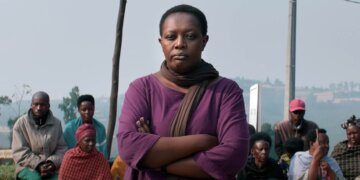
Ben’Imana explores the lingering trauma of the 1994 genocide against the Tutsi and the difficult process of reconciliation decades later. The story follows Vénéranda, a woman confronting painful memories while navigating conversations between survivors and the families of perpetrators, but faces her own moral ambiguity when her daughter gets pregnant.
One of the most significant aspects of Ben’Imana is Dusabejambo’s commitment to telling the story in the native language of Kinyarwanda despite pressure from funder to use English or French, she revealed in an interview with Variety at the start of Cannes Film Festival.
“I couldn’t see this film being in any other language. I really wanted to capture the weight of words. “It took a long time, but I didn’t want to lose the heart and soul of the film through the financing machine,” she told Variety.
The aspect of language has been long overlooked in Rwandan cinema, as many films made in the country, especially those funded by foreign producers often opt for English or French, casting a shadow on the cultural authenticity of the story.
By choosing Kinyarwanda, Dusabejambo preserved not only linguistic authenticity but also the rhythm, cultural nuance, and emotional texture of Rwandan life. The film’s reception at Cannes demonstrates that audiences around the world are willing to engage deeply with stories told honestly without worrying about language barriers.
And Rwanda’s emergence at Cannes is symbolically powerful, not only for Dusabejambo as a first-time feature filmmaker, but also for Rwandan filmmakers and the country as a whole. Rwandan filmmakers, cultural policymakers and the Ministry of Arts have warmly welcomed the film’s win.
State Minister for Youth and Arts Sandrine Umutoni, who was present during the film’s world premiere, told TV5: “It’s a pride of our country [Rwanda] to be at Cannes accompanying the film which is Rwandan-Gabonese co-production. It sends strong signal to the world that Rwanda is ready for co-productions and that the cinema industry in Rwanda has beautiful stories to share with the world.”
The film’s success could encourage greater institutional attention toward the film industry, particularly around long-standing conversations on establishing sustainable funding mechanisms that would allow Rwandan filmmakers to develop projects with stronger local support and reduced dependence on international financing.
Before making Ben’Imana, Dusabejambo had already established herself as one of Rwanda’s most important filmmakers through a series of acclaimed short films. Her first short film, Lyiza, premiered at Tribeca in 2011. With Ben’Imana, which she spent more than a decade developing, she transitions into feature filmmaking with remarkable confidence and artistic maturity. Many critics have noted that the film feels less like a debut and more like the work of a filmmaker already fully in command of her cinematic language.
International sales for Ben’Imana are handled by MK2 Films, whose recent titles include last year’s Palme d’Or winner It Was Just an Accident.
EDITOR’S NOTE:
All reporting, interviews, and reviews on Sinema Focus are protected under international copyright law and the Kenya Copyright Act, 2001. No part of this publication may be reproduced, rewritten, republished, or redistributed in any form by media outlets without prior written consent. For reprint or syndication inquiries, contact editorial@sinemafocus.com.
©️ 2026 Sinema Focus / African Film Press. All rights reserved.
Never miss a moment.
Get the latest stories from Sinema Focus delivered straight to your inbox. Subscribe to our newsletter now.