
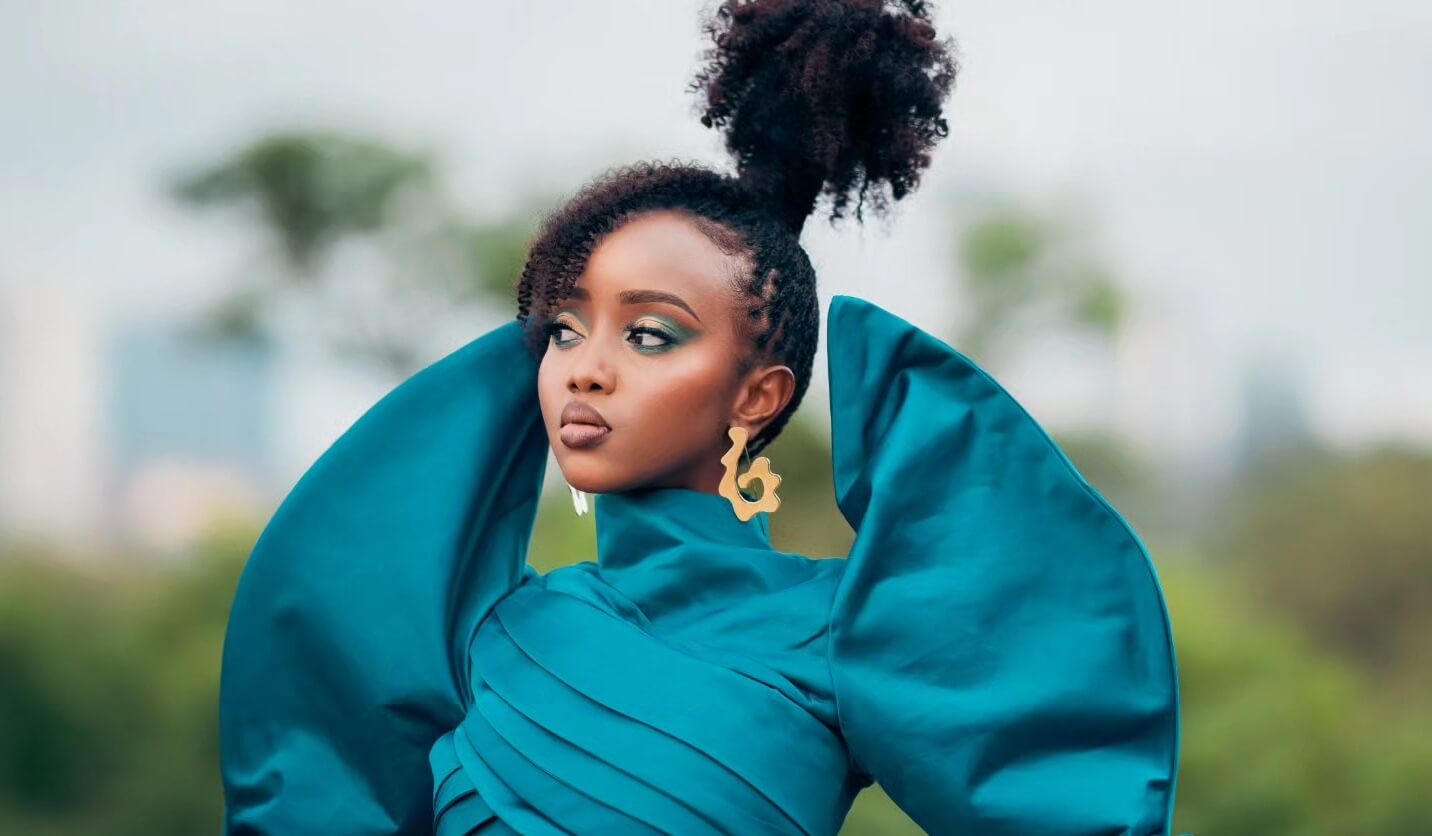
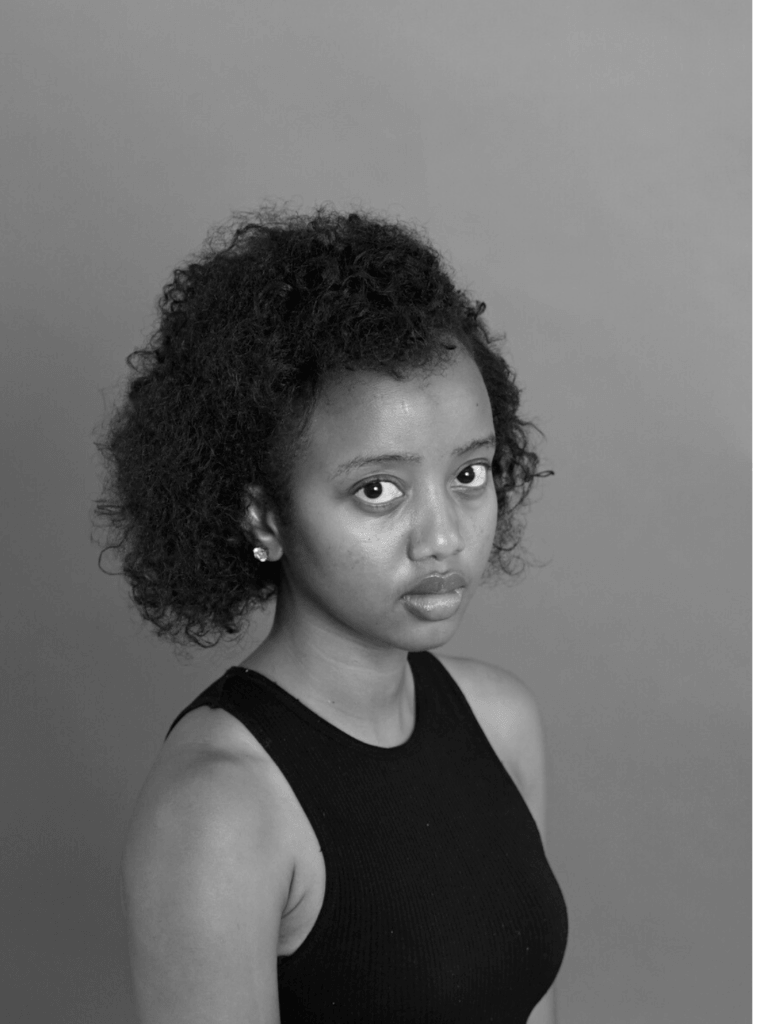
As an arts journalist, you drift through a crowded constellation of creatives that flare and fade with the season. Yet, every so often, in that overfamiliar churn of filmmaking, you encounter a presence that resists easy consumption. A versatility that refuses to settle into a single, marketable note. What remains is the impulse to strip away the costumes, the calibrated emotional crescendos, the flicker of stage light and camera lens, and instead watch one actor I was recently inclined to speak with, Foi Wambui, reveal herself as something disarmingly human – a woman negotiating the soft, slippery edges of what it means to be “young” and creative, depending, as she wryly admits, on who is doing the measuring.
“Foi Wambui is a woman, a young woman, depending on your definition of young. I’m a Kenyan creative. I am passionate about the arts. I am passionate about telling stories in whatever way and form. I love living life in every moment authentically. I love being present. And I’m passionate about creating spaces that make people feel seen, heard, and understood,” she tells me.
Stay ahead of Kenya & East Africa’s film and TV.
Get our stories in your inbox — Subscribe to our newsletter now.
At the start of this interview, she describes herself in such labels that appear simple, yet feel almost too rigid for someone who treats storytelling as a state of being and something porous that seeps into every form it can find.
“I am a mother,” she says, then corrects herself mid-sentence, “no, not quite, but a cat mom” which lands somewhere between a joke and a confession. You begin to understand that her identity is a living collage: solitude and intimacy, stillness and connection. A creative equally at home in her own quiet as she is in the company of those who know how to meet her there.
That inwardness feeds her work, giving it a kind of tensile strength. For Wambui, a character doesn’t begin with performance but with listening, almost like eavesdropping on an intention that existed before she arrived. She approaches a role the way a careful critic might approach a film: first by seeking the director’s or writer’s private vision, that architecture of thought and feeling that hovers behind every line.
“When writers write and directors direct, they already have an image of what they imagine this character would look like, how she sounds, how she moves, all of that,” she says. “So I take in as much of that information as I can, and then I go into my own work, looking at the lines, trying to understand where the character is from, where she is in each scene, what she wants from her life, and what she wants in each moment.”
Once she has gathered those impressions, she retreats inward, into a more solitary, investigative mode, reading and rereading the script until it loosens and begins to confess its secrets.
In that process, Wambui navigates the tension between herself and the character, sharpening their differences with deliberate choices. You see this vividly in her role as Soila in Maisha Magic Plus’ telenovela Shanga, where she stepped into a cultural terrain that wasn’t her own and refused the easy shortcuts of performance.
In Shanga, she worked at the edges of language distance, knowing she was not Maasai herself like her character, filling it with attention. Language became her way in, a kind of emotional key. She learnt the Maa dialect as a reorientation of the self.
“Every individual speaks and acts largely based on how and where they’ve grown up. So for me, choosing to speak Maasai in certain moments – and even when using Kiswahili or English, carrying a Maasai accent – was about avoiding anything that felt false,” she explains.
That, together with costume and other elements, worked hand in hand to ground her in the character and deliver the lines as authentically as she could. “It became a real advantage, being able to decide when Maasai felt true in a conversation and when another language made more sense depending on who I was speaking to,” she says.
What becomes clear, listening to Wambui, is that acting, at least as she practices it, isn’t just about entry, but about exit, too – the necessary ritual of returning to oneself after spending the day inhabiting someone else’s emotional weather. She speaks of “de-roling” with the same attentiveness she brings to building a character, as if stepping out requires as much craft as stepping in.
“You have to de-role every day, especially when you’re working on a long-form project,” she says. “For me, it is in the small, simple things – the music I listen to when I’m leaving set is very different from what I play in the morning. In the evening, I’m trying to come back to myself, so I listen to what Foi enjoys.”
There are physical things too, like being intentional when she removes her costume and puts on her own clothes, or even small things like rings. “Just reminding myself, ‘I’m taking off Soila, I’m back in my body.’
Wambui says though, that most roles have affected her in positive ways, but some are harder. “There was one where my character struggled with depression, and it left me in a dark space for a while,” she admits. “But others, like Soila, changed me gently as she was soft, open, unafraid to care or be cared for, and I think I carried some of that into my own life. I’m softer now, more open to being taken care of, and I’m grateful for that as it helped me enter my femininity in a deeper way.”
From the way Wambui speaks about her craft, you begin to understand that she resists the seductive myth that great acting requires bleeding oneself dry, that the only way to access pain is to exhume it. Instead, she draws a line between the character’s wounds and her own, treating them as separate ecosystems that can be studied without collapsing into each other.
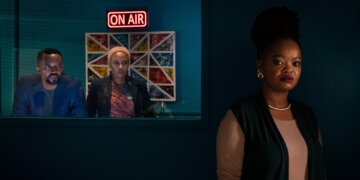
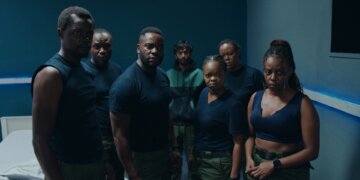
In her role as Stella – “Pink” – in the Showmax series Subterranea, where her brightness operates as a kind of camouflage for something darker underneath, the temptation might have been to mine personal emotional history for authenticity. But Wambui approached the character as an independent being.
“I like to create the character as an independent being, understanding what they have gone through and putting myself in their shoes, asking why they feel the need to be a certain way,” she says. “Like with someone who seems bubbly, I’ll ask, is that a mask? What are they hiding? I go deeper into them rather than looking at my own life. It’s easy to say, ‘I’ve felt like that before,’ but I don’t rely on my personal experiences when building a character. I try not to, because that’s where overlap can happen—you find yourself carrying the trauma from the scene back home with you. And then you’re not just acting it, you’re living it, and that’s something I try to avoid.”
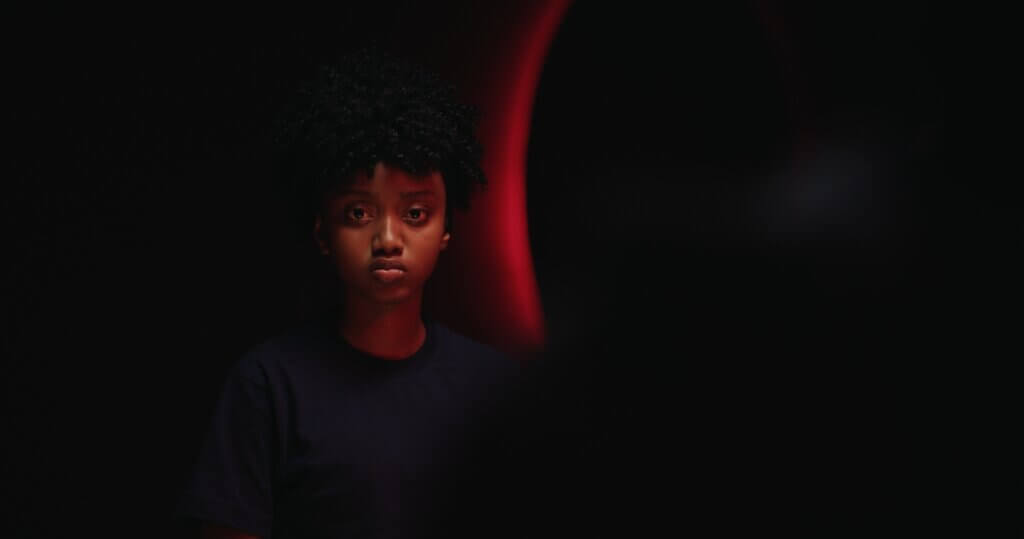
Her work on Subterranea, which is Kenya’s first sci-fi series, may have been her favourite role yet. What excites her most is risk, the kind of creative leap that flirts with the unfamiliar and refuses the safety of repetition. “I love when filmmakers take a chance,” she says. “It was one of my biggest and best opportunities, because it was different, challenging, and exciting.”
She points to a broader shift in Kenyan storytelling where shows like Subterranea are creating a space for experimentation. “For years, Kenyan producers and directors felt like, okay, Kenyans like this content, so let’s keep churning out the same thing. And yes, people will watch,” she says. “But now, we’re reaching a place where Kenyan storytellers are realising that we shape what society watches, that we shape the mindset of the people watching. It excites me to see people wanting to take risks because Subterranea was a risk.”
Wambui is optimistic about what lies ahead. Already, younger filmmakers like Trevor Sagide are experimenting with genre filmmaking, while Likarion Wainaina, ever the boundary-pushing storyteller and director of Subterranea, is in post-production on the psychological horror feature, Anam’s Wake.
“I’m hopeful for what comes next, for scripts that are challenging, stories that think outside the box,” says Wambui. “The same Kenyans who watch global hits like The Avengers or Avatar are ready for something different, even in a Kenyan context. The market is there; people are willing to open their minds. Now it’s up to us to tell those stories authentically, in a way that belongs to our space.”
As a theatre actor as well, Wambui speaks about her shift between stage and screen like someone describing two different climates of being. Theatre, she says, is immediate, unrepeatable. “There is no second, third, fourth take. Once the curtains open, that is your one chance to do your best,” she says. “It makes you agile and you have to adapt in the moment, listening, responding, and being grounded. The audience is alive, their reactions instantaneous: if they laugh, they laughed; if they don’t, they didn’t. You hold that energy in your hands, literally, and it’s such an incredible feeling. It’s creative, fun, and magnetic.”
Screen, by contrast, offers a different kind of intimacy, a microscope on the smallest movements, the quiet shifts in a gaze, a twitch of a hand and nuances that the stage cannot fully capture. “Screen captures micro expressions beautifully. Even without lines, you can see what someone is feeling,” she says. For Wambui, the two practices coexist in a dialogue: one trains responsiveness, the other precision.
Her new project keeps her firmly on the stage, and it is one that promises both reverence and provocation. In Followers, a play running from 27 to 29 March, Wambui takes on the role of Anna, Simon Peter’s wife – a figure glimpsed only briefly in the Bible, when Jesus heals her mother-in-law. “Anna is barely mentioned,” she explains. “So this story imagines what she would be thinking, feeling, experiencing in that moment. It’s a beautiful story. Women in the Bible often aren’t highlighted; many aren’t even named. Here, we give them names, backstories, a sense of their full humanity.”
There is a subversiveness to the work, a reclaiming of narrative voice, and Wambui acknowledges it might stir conversation. So, it might not just be another play, she suggests, but an invitation to see these women, and perhaps history itself, through a lens more attentive to the lives that were always there, quietly present, yet too often overlooked.
Her faith, she insists throughout our talk, is a lens and a grounding presence that informs her work without constraining it. “This is such a blessing for me,” she says of Followers. “Jesus is the most important person in my life, so getting to do a role like this, in this setting, is wonderful. And even though it’s a story rooted in Christianity, it’s not preachy as you can see yourself as a human being in the conversations the actors are having, whether you’re Christian or not.”
Wambui pushes back against the assumption that her spirituality should confine her to virtuous or exclusively faith-based roles. “Being a Christian doesn’t mean all spaces you work in are Christian spaces. You show up as a Christian by how you are in that space,” she says. “There are antagonists, there are protagonists, and as an actor, I can stand in the gap for someone else, so the audience can see themselves, understand the choices before them. If I have to play an antagonist, then well and good. I’ll play it fully, faithfully, and with integrity.” Faith, in her view, doesn’t dictate the story she tells but shapes how she inhabits it.
And that groundedness may be why, even with two Kalasha Awards to her name, Wambui treats success as something private, internal, and measured less by such accolades and more by the fidelity of her own effort. “Success for me is if I’ve done the best that I could possibly do – that’s literally it,” she says. “Of course, accolades are nice, and being recognised by peers is meaningful, maybe even more than awards, because they know the work. But ultimately, my validation is internal. I ask myself: Did I give my all? If yes, then that’s enough.”
Even with the range she’s already shown, Wambui’s imagination stretches towards roles she’s yet to inhabit, those that might test not just her skill but the very perception of her presence. “I want to play an antagonist, really fully, like a homewrecker, someone morally complicated,” she says. “And I want roles that transform me physically, where you don’t immediately recognise me – where my hair, my body, my voice are so different it takes a moment to realise it’s me.”
EDITOR’S NOTE:
All reporting, interviews, and reviews on Sinema Focus are protected under international copyright law and the Kenya Copyright Act, 2001. No part of this publication may be reproduced, rewritten, republished, or redistributed in any form by media outlets without prior written consent. For reprint or syndication inquiries, contact editorial@sinemafocus.com.
©️ 2026 Sinema Focus / African Film Press. All rights reserved.
Never miss a moment.
Get the latest stories from Sinema Focus delivered straight to your inbox. Subscribe to our newsletter now.