

On September 29, 2023, Kenya’s film industry stakeholders gathered under the dome of Nairobi Cinema for a first-of-its-kind event – the State of the Film Industry Summit. The event was convened by the Kenya Film and Television Professional Association (KFTPA), bringing together guilds, corporations, and government commissions from across the ecosystem to share their mission statements and frustrations. Entirely organised by the public-facing wing of the industry, the summit was a breath of fresh air, an earnest attempt to steer the sector away from its historic over-dependence on government.
The final speaker of the day was Ababu Namwamba, the then Cabinet Secretary for Youth Affairs, Sports and the Arts – fresh from a trip to the world’s entertainment capital, Hollywood, where the government had opened partnership talks with Invention Studios and the GRAMMYs. He delivered not just a speech, but what felt like a conversation. Confident and articulate, he listened, argued, and made promises that in the moment felt genuinely doable. From the body language of the filmmakers leaving the room, there was a flicker of cautious hope. It felt, briefly, like the state and the industry were finally charting a forward path together.
Stay ahead of Kenya & East Africa’s film and TV.
Get our stories in your inbox — Subscribe to our newsletter now.
In the 22 months since, the film and television industry – now bundled under the Ministry of Youth Affairs, Creative Economy, and Sports after reconstitution in 2023 via an executive order – has seen a revolving door of leadership: Ababu Namwamba, Kipchumba Murkomen, and now Salim Mvurya. Each new face has brought shifts in tone, but very little to show in terms of substance. According to the ministry’s record over the past financial year, the promises made to the industry have consistently taken a backseat – particularly as the ministry redirected the attention of its resources toward preparing for sporting events such as AFCON 2027 and CHAN.
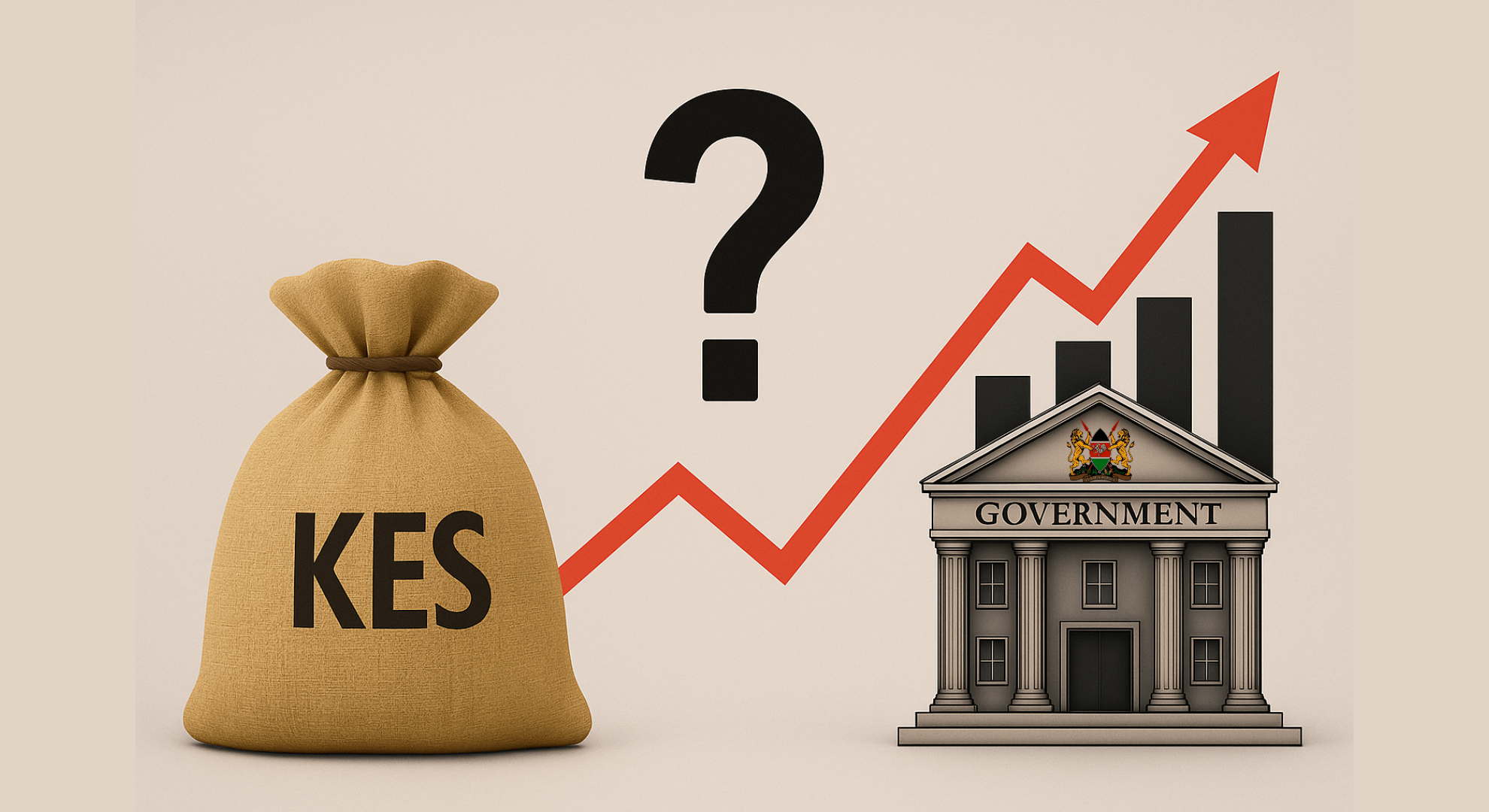
Behind the political stage, the Department of Youth Affairs and Creative Economy, now led by PS Fikirini Jacobs since April 2025, has presided over a substantial budget. For the 2024–25 fiscal year, KSh 16.3 billion (~USD 123 million) was allocated to the Digital Superhighway and Creative Economy pillar. An additional KSh 23.7 billion was allocated under the broader Tourism, Sports, Culture, and Recreation sector which included KSh 16.5 billion for the Sports, Arts, and Social Development Fund, and a further KSh 120 million was added specifically for film development services in the 2025 Supplementary Appropriations Bill signed by the President in March 2025.
Despite contributing 5% of the national GDP, the creative sector received less than 1% of the national budget – and even that small slice’s utilisation is shrouded in vagueness and opacity. For an industry where indie filmmakers are making feature films for as little as one million shillings, it’s bewildering to imagine what KSh 120 million could produce in a calendar year under the control of filmmaker’s hands. Yet the Kenyan government is likely to finish the year with no films to show for the billions allocated in the budget.
Compare the ministry’s massive allocation to a private company like MultiChoice, which recently celebrated 30 years in Kenya and has invested over $50 million since 2016. Despite the usual criticisms, MultiChoice’s footprint in the industry is clear: it has funded productions, trained creatives, launched channels, and maintained a presence in both satellite and streaming markets – growing to dominate the industry by facilitating the lion’s share of productions in the country. And with the recent approval of its acquisition by Canal+, there’s hope (and expectation) that the French media giant comes with greater financial muscle that could further strengthen MultiChoice’s investment across Sub-Saharan Africa, including Kenya. The government’s annual budget in the same time has rivalled and now exceeds MultiChoice’s 9-year investment in Kenya, yet its output and infrastructure feel decades behind.
Take KBC, the national broadcaster, which received KSh 2.19 billion in the 2024-2025 budget and KSh 2.28 billion in the 2025-2026 budget. Once a leader in content through classics like Vitimbi, Vioja Mahakamani, and later Makutano Junction, today it barely flickers on – reduced to legacy shows, imported telenovelas, and a bemoaned brand for its outdated visual quality which seems stuck in standard definition, even for major live sporting events. Citizen TV’s telenovelas like Neema, Sultana, and Maria – now completely dominating the screens of non-streaming households – were once the staple brainchild of KBC, with shows like Tausi and Tahamaki. The government was actively competing in the creative industry with its own messaging and brands. Now, KBC’s viewership is limited to those who haven’t paid for set-top box subscriptions, or to airing presidential addresses that other stations are forced to lease from it.
How can a ministry’s budget balloon year after year, yet its influence in the industry seems to be waning? Where is all the money going?
As the cornerstone of President William Ruto’s campaign, the Kenya Kwanza manifesto was ambitious, even for the creative sector: pass the Creative Economy Bill within 100 days, launch a film fund, create hubs in each county, incentivise private-sector investment and ensure transparency. Except for their effort to woo the most ambitious of foreign investments, almost everything in the government’s now infamous bottom-up agenda has been non-existent. But even these foreign investments remain just that, promises that are made in high-profile meetings, with ambitious deals signed here and there with entities like Invention Studios but with nothing tangible to show for it so far.
There is a clear legislative gap at the heart of it. The Creative Industries Bill, sponsored by Namwamba in 2024, reads like a love letter to creators: it promises a film fund, streamlined systems for IP registration, harmonised permits, a public-facing portal, tax incentives, and the establishment of an Office of the Creative Industries Registrar. Yet there has been no movement on the bill past the draft stage and no updates since. It now appears to have been overtaken by the Creative Economy Support Bill sponsored by Senator Eddy Gicheru Okech. Clause 19 of the Creative Industries Bill had proposed a “Creative Economy Information System and Portal” to track public spending and beneficiaries. But without gazettement or legislative action, the idea remains aspirational – no such system exists as of July 2025, and it’s unclear at this point if the ministry intends to provide a publicly accessible audit trail at all.
Meanwhile, projects like Talanta Hela, once presented as a flagship youth and creative talent pipeline, never gained ground beyond the promises from the leadership that launched them. Worse still, once-vibrant programs that predate the current government have quietly disappeared or have simply been deferred with no explanation to the very stakeholders they serve. The Kalasha Film and TV Awards and Market (which shifted to March as of 2024), which brought together all industry stakeholders for an annual reckoning, is yet to happen this year. Even small programs like My Kenya My Story Mobile Short Film Competition that was once a launchpad for young indie filmmakers seem to have stalled without so much as a word. In the 2025-2026 budget, the government more than doubled its support to the Kenya Film Commission, allocating KSh 166.5 million up from KSh 74 million in 2024. But insiders say the funds are yet to be disbursed, which would explain why most of the commission’s programs and funding calls have slowed to a whimper.
The inaugural US-Kenya Creative Economy Forum (June 5, 2025) – attended by industry giants like Robert A. Boyd II (Tyler Perry Studios), Nicholas Weinstock (Invention Studios) and NBA Africa’s Michael Finley – seems like another moment of promise. But again, beyond grand declarations – like Cabinet Secretary Salim Mvurya’s commitment to double the creative sector’s GDP contribution to 10% by 2025 – we’ve heard little about timelines, reforms, or accountability with only five months to go until the year ends. A Creative Economy Task Force was announced, but without a proper mandate, action plan, timelines, or even membership details, these regurgitated promises look less like policy execution and more like political performance.
We’ve been here too many times. We’ve seen no tangible outcomes yielded from these summits, seemingly trapped in a loop of announcement after announcement with no follow-through. There is no doubt there are huge gains lost every year, with so much of the industry’s investment disappearing between grand political statements. It is almost insulting to promise a doubling of GDP contribution with the same structural and policy inadequacies, mismanagement of funds and vague targets that seem detached from the day-to-day cultivation of a creative industry.
In the current 2025–26 financial year, a more detailed KSh 670.6 million has been allocated specifically to film development services. But this money is split across multiple agencies with vastly different mandates. The Kenya Film Classification Board (KFCB) alone was allocated KSh 317.4 million – nearly half the entire film budget – to carry out licensing and regulatory duties. Meanwhile, as stated earlier, the Kenya Film Commission was allocated KSh 166.5 million, and the Kenya Film School KSh 94.2 million for training. Additional amounts include KSh 39.9 million for the headquarters of the Film Production Department, KSh 17.7 million for its field offices, KSh 19.7 million for film school infrastructure, and KSh 15 million for a national film location mapping project.
That the largest slice of the film budget goes to classification and regulation – rather than creation – is deeply telling. In an industry struggling to get films funded, the government has chosen to invest more in controlling output than enabling it, reflecting the deeply rooted bureaucratic instinct to manage culture rather than cultivate it. In twelve months, will there be a billion shillings’ worth of improvements from the billion-shilling injection of capital into the creative economy?
If the government is as serious as it claims to be, and if it wants the investments it’s courting to yield any returns, it needs to stop talking at creatives and start talking with them. But beyond the talks and summits that have mushroomed in recent months, there needs to be an honest audit of expenditure. Where previous allocations went, who received what? What impact did it have? Why are key programs slowly disappearing, and under whose watch? What metrics are being used to measure success or failure in policy rollout? And more importantly, why does leadership across both ministry and industry unions seem more performative than transformative?
There is good reason to believe that had Namwamba remained in office, the same problems would still exist – it is the government, after all. And Kenya Kwanza has yet to prove that it can back up its grand promises in almost all sectors. Yet there’s a sense that asking for accountability and reassessing policy based on what was progressively succeeding or failing would have been much easier. It’s hard to hold anyone accountable when there is constant rotating leadership, and at the very least, it’s clear that there is very little creative leadership within the ranks of the Creative Economy Ministry.
Both government and creative organisations have, over the last year, become complicit in upholding a slow, opaque system that was loudly criticised at the very summit that started this discussion. KFTPA, despite the success of this first summit, hasn’t shown the willingness to fill the gap left behind by the government in providing spaces for regular stakeholder engagement. The guilds, championed as voices of accountability during the summit to ask and demand dialogue, seem more interested in growing their membership than initiating conversations about how public funds meant for their members are being spent. The Kenya Actors Guild (KAG), currently undergoing a restructuring under new leadership led by Peter Kawa – perhaps the most active of all the guilds – seems sober enough to champion for change beyond the usual bureaucracy, and only time will tell if it can develop the bite to hold the powers that be accountable. Still, KAG cannot do this alone, and so the question remains: where are all the other guilds at a time when the industry needs them the most?
As we steam through a new financial year, at a time when the government is facing its toughest challenge yet – rebuilding trust with a generation disillusioned with politics, distrustful of institutions, and vocal about its frustrations – it must wake up to the power of the creative sector. Not just for employment or culture, but for national identity, innovation, and political messaging. It’s a digital content age, where both social and programmed media are having round-the-clock influence on the political and socio-economic climate in the country.
The government must realise it is not a victim that has to rely on regulations, force, threats, and arrests to shape the media landscape. It is the largest stakeholder – and it should start acting like it. That 1% in the budget that contributes 5% to the GDP, if used efficiently and transparently in today’s digital age, will do more for its image than any forum, summit or foreign investment the ministry is courting ever could.
More Deep Dives on the Industry Behind the Scenes:
- Mid-Year Review: How Kenya’s Film, TV & Theatre Industry Fared in the First Half of 2025
- The Ticking Time Bomb: Inside Kenya’s Unlawful and Unethical Contracts That Are Binding Filmmakers
- Too Expensive, Too Few, Too Unstructured: The Crisis in Kenyan Cinemas and the Case for Saving Them
- Stories We Can’t Tell: The Cost of Censorship in Kenya’s Film Industry
- Butere Girls’ ‘Echoes of War’ and the State’s Deep-Rooted Fear of Critical Theatre
- Cinema Culture in Kenya and Why We Must Win the Goodwill of the Audience
- An Interrogation of Kenyan Cinema: Why Our Films are So Forgettable
EDITOR’S NOTE:
All reporting, interviews, and reviews on Sinema Focus are protected under international copyright law and the Kenya Copyright Act, 2001. No part of this publication may be reproduced, rewritten, republished, or redistributed in any form by media outlets without prior written consent. For reprint or syndication inquiries, contact editorial@sinemafocus.com.
©️ 2026 Sinema Focus / African Film Press. All rights reserved.
Never miss a moment.
Get the latest stories from Sinema Focus delivered straight to your inbox. Subscribe to our newsletter now.