
Growing up, one of the better movie experiences was watching DJ Afro narrations over martial arts action films. From Van Damme to Scott Adkins, these usually involved a Hollywood superstar thrown into an Asian setting. Though cultural sensitivities were kept to a minimum and dialogue was underwhelming on an emotional level, when it came to communicating with their punches and kicks, DJ Afro could gloss over the major details.
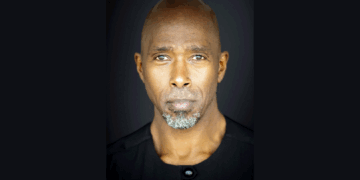
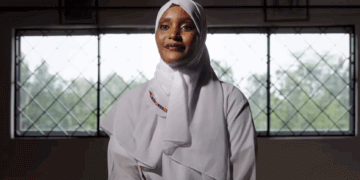
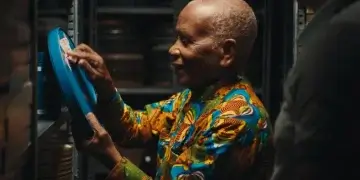
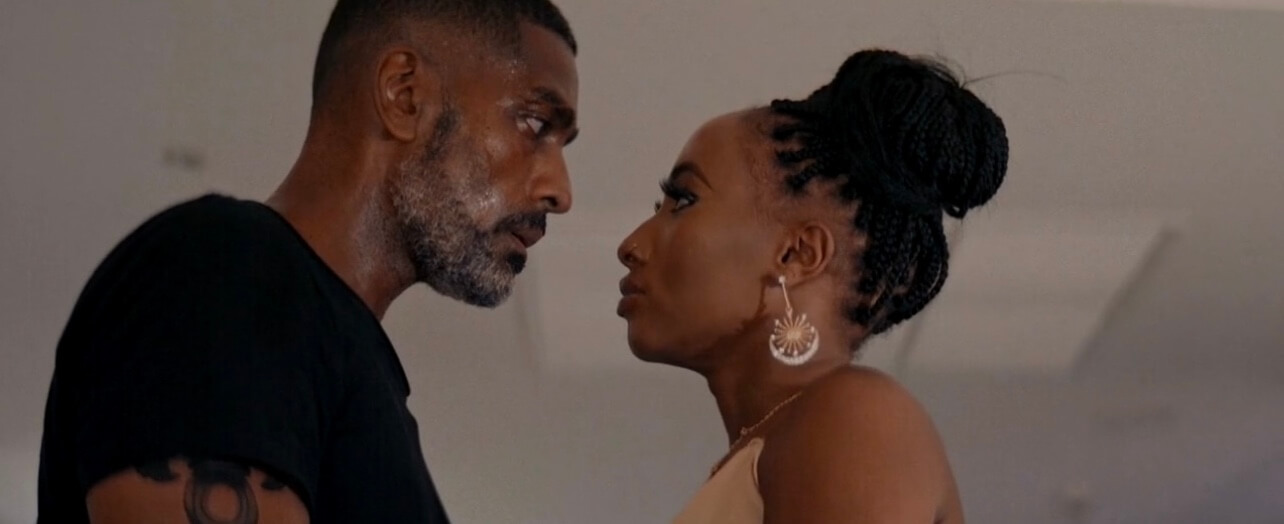
With The Dog, the Kenyan crime noir directed by Swedish-Ugandan Baker Karim, one gets a similar experience, except this time, the film is set in Mombasa, with a foreign star – Karim’s brother Alexander Karim – at its centre. However, it lacks both the martial arts spectacle and the familiar quips of DJ Afro to elevate its muted crime narrative. Instead, it tells the story of a small-time drug dealer, MZ (Karim), who, while under assignment to drive a young escort (Caroline Muthoni), becomes smitten with her and attempts to save her, only to spiral deeper into the city’s drug-infested underbelly. MZ navigates a film shot entirely from his perspective, weaving between romantic entanglements and his own fastidious yet naïve personality as he clashes with the raw caricatures of the city around him.
Stay ahead of Kenya & East Africa’s film and TV.
Get our stories in your inbox — Subscribe to our newsletter now.
The film embraces the tropes of a crime flick, but without the focused energy of well-executed action or narrative propulsion, it drifts aimlessly, much like its protagonist. It aspires to be a bold, unflinching portrait of the disenfranchised, plunging into the depths of the city, capturing its rushing background clutter and the aimless movements of its lead character. Yet, it offers little of substance beyond this immersion. If it had something meaningful to say, whether through the will of its protagonist, the scrutiny of the world it inhabits, or the relationships at its core, its descent into rudderless murk might have been justified. Instead, it hides behind its own visuals, giving us little more than a voyeuristic fascination with its setting.
Mombasa as a setting is rich with potential – the bustling streets and the sound of Kenyan music form a vibrant backdrop – but The Dog fails to fully integrate this environment into its storytelling. The geographical and temporal settings feel more like set dressing than an organic part of the narrative. And despite its clear ambition, the film never quite convinces us to empathise with its characters; instead, it fosters a sense of othering, as if we are mere spectators observing caged animals in a zoo rather than engaging with fully realised human beings. And the supporting characters, underdeveloped within its graceless pace – or the casualty of it – orbit the protagonist, as his brooding persona stumbles through bad translations of his grunts to the more animated cast.
At a time when films like Anora explore the intimate and chaotic lives of sex workers with empathy and understanding, The Dog feels like the opposite end of the spectrum. Crude in its depiction of its characters, relationships, and even the criminal elements of its narrative, it becomes an exercise in cultural voyeurism. It lingers too long on lurid details without providing the depth necessary to justify its gaze. Its fixation on its protagonist, a deeply unlikable and self-absorbed figure, feels less like a character study and more like indulgence in shock value, without giving him any justifiable cause for his actions.
To its credit, the performances are strong, and the film occasionally captures striking moments of authenticity. If Denis Villeneuve’s claim that dialogue in film doesn’t matter holds true, then perhaps, going by visuals alone, The Dog is one of the best films shot in Kenya. The camera’s straightened approach, the life bursting through every frame, the colour, composition, and sound – combined with the boldness of some of its shots – create a unique and, dare I say, captivating image of the Kenyan coast. If only the characters didn’t have to talk. Its sluggish pacing, meandering narrative, and careless motivations make for a draining watch. Rather than a fully realised story, it plays more like an extended observation, one that ultimately fails to coalesce into a satisfying conclusion.
While The Dog brims with both good and bad ideas, it never quite finds balance. Its strength, the editing and direction, are at times its gripe, with its cluttered stitching. Its aesthetic polish, bathed in golden light and pristine framing, contrasts sharply with its raw subject matter, further underscoring the disconnect between the film’s artistic intentions and its visual execution. The local actors work hard to breathe life into a caricatural script, but their efforts are undermined by the film’s lack of narrative focus and the director’s incurious focus on the one character who remains expressionless.
What remains is an often uncomfortable, sometimes tedious experience that suggests little more than a strange obsession with the underbelly of coastal life, one that could only be appreciated with a language barrier in between. It is exploitation in the truest sense, not a film made for those it depicts, but for an audience comfortably distanced from the struggles on-screen, watching from the privileged vantage point of a theatre. And yet, I can’t help but wonder: in the eyes of kids from somewhere else, who know neither the language of Swahili nor the possibility of plot holes, would they see The Dog as a great movie experience, like we did with those Van Damme films of yesteryears?
The Dog made its Kenyan premiere at the 2025 NBO Film Festival. It opens in cinemas across Nairobi, Mombasa, and Kisumu on 24 October.
Check out our full coverage of the 2025 NBO Film Festival here.
EDITOR’S NOTE:
All reporting, interviews, and reviews on Sinema Focus are protected under international copyright law and the Kenya Copyright Act, 2001. No part of this publication may be reproduced, rewritten, republished, or redistributed in any form by media outlets without prior written consent. For reprint or syndication inquiries, contact editorial@sinemafocus.com.
©️ 2026 Sinema Focus / African Film Press. All rights reserved.
Never miss a moment.
Get the latest stories from Sinema Focus delivered straight to your inbox. Subscribe to our newsletter now.