
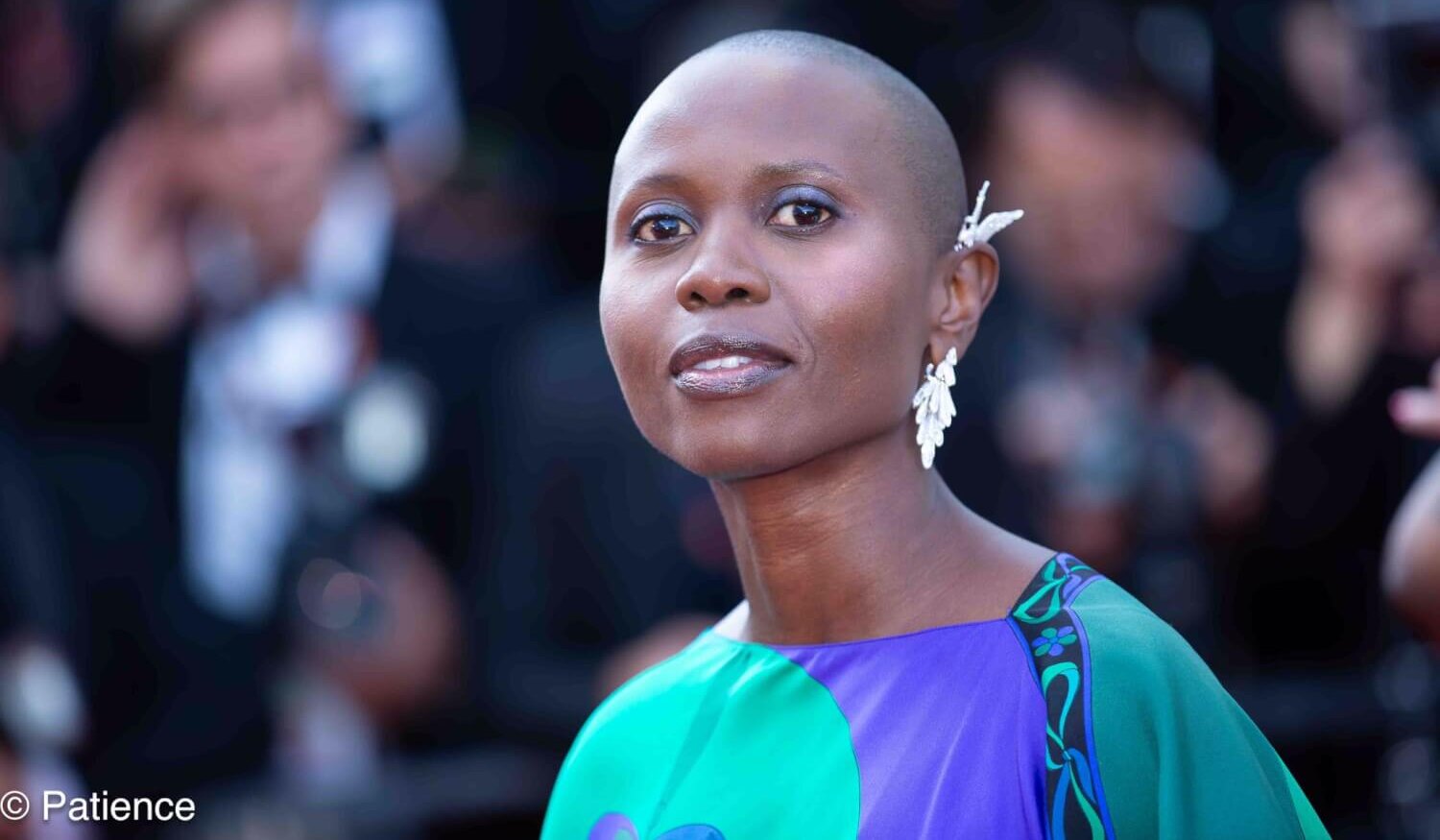
When A Quiet Place: Day One came out, every Rwandan rushed to the cinema, not because they were the fans of the horror franchise, but because a Rwandan was part of the cast. Even if she had a small role in the film, Eliane Umuhire carried a moment of national pride for Rwandans who had not seen one of their own in a major Hollywood film since 2005, when Carole Karemera starred alongside Idris Elba in Sometimes in April.
In A Quiet Place: Day One, Umuhire plays Zena, the wife of Djimon Hounsou’s character Henri. Kenyan actress and Academy winner Lupita Nyong’o leads the film as Samira, a terminally ill cancer patient who must navigate the chaos of New York City on the first day of a deadly alien invasion while battling her illness.
Stay ahead of Kenya & East Africa’s film and TV.
Get our stories in your inbox — Subscribe to our newsletter now.
Born in Kigali in 1986, Umuhire got her international breakout in Birds are Singing in Kigali (2017), a Polish in which she plays Claudine, a Rwandan genocide survivor living in Poland who comes back in Kigali to search for her family and her past. For this role, the French-Rwandan actress won Best Actress at the 2018 New York Polish Film Festival and an ex-aequo Best Actress Award with her co-star at Karlovy Vary among other accolades.
In an exclusive with Sinema Focus, Umuhire reveals how landing her role in A Quiet Place: Day One came as a complete surprise. Her agents didn’t tell her what project she was auditioning for when she recorded her audition tape. “I was overwhelmed when I learned that I got the part!” she says. “I was a fan of A Quiet Place 1 and 2, even though I’m not usually drawn to horror. The film’s unique storytelling captivated me. Getting the part felt like a beautiful gift. I’m glad I didn’t know I was auditioning for it at the time. I might have been too stressed or tried too hard.”
Growing up in Rwanda, Umuhire was first drawn to stories from a young age, those she read, those she heard, and those she imagined while listening to radio operas on the National Radio. “I realised how stories had a way of feeding and widening my imagination,” she recalls.
Her parents encouraged that curiosity, supporting her frequent visits to the French Cultural Centre, which housed the only library in Kigali at the time. It was there that she encountered theatre for the first time. Later, during a French lesson at school, she performed in front of her classmates and felt something click. “That’s when I knew I wanted to keep doing that, incarnating people,” she says. “Later on, at university I had a chance to join the school theatre troop and my dreams of being a storyteller started taking shape.”
Her first audition as a screen actor didn’t go so well. Umuhire remembers how she blew it up that the director discouraged her from pursuing acting. “While still in university, I auditioned for a main role in a film, and it was a disaster. I was convinced I had nailed it, but the director told me otherwise and even discouraged me from the dream,” she recalls. “Thank God I didn’t listen! If I had, I wouldn’t have landed the lead in Birds Are Singing in Kigali.”
Birds Are Singing in Kigali became her breakthrough moment. “I couldn’t believe it,” she says, adding that she had auditioned out of curiosity. The success of the film clarified her artistic compass and opened doors she had never imagined possible. “It helped me understand the kind of projects I wanted to be part of, stories with impact, stories that spark conversation,” she says.
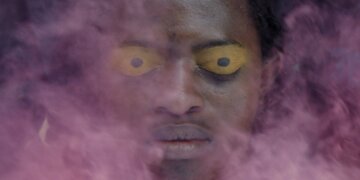
That conviction has since led her to acclaimed projects such as Omen (2023) by Baloji, Neptune Frost (2021) by Saul Williams, Trees of Peace (2021), and Planet B (2024), many of which premiered at major international festivals including Cannes and Venice. “There is no better reward for an artist,” Umuhire says.
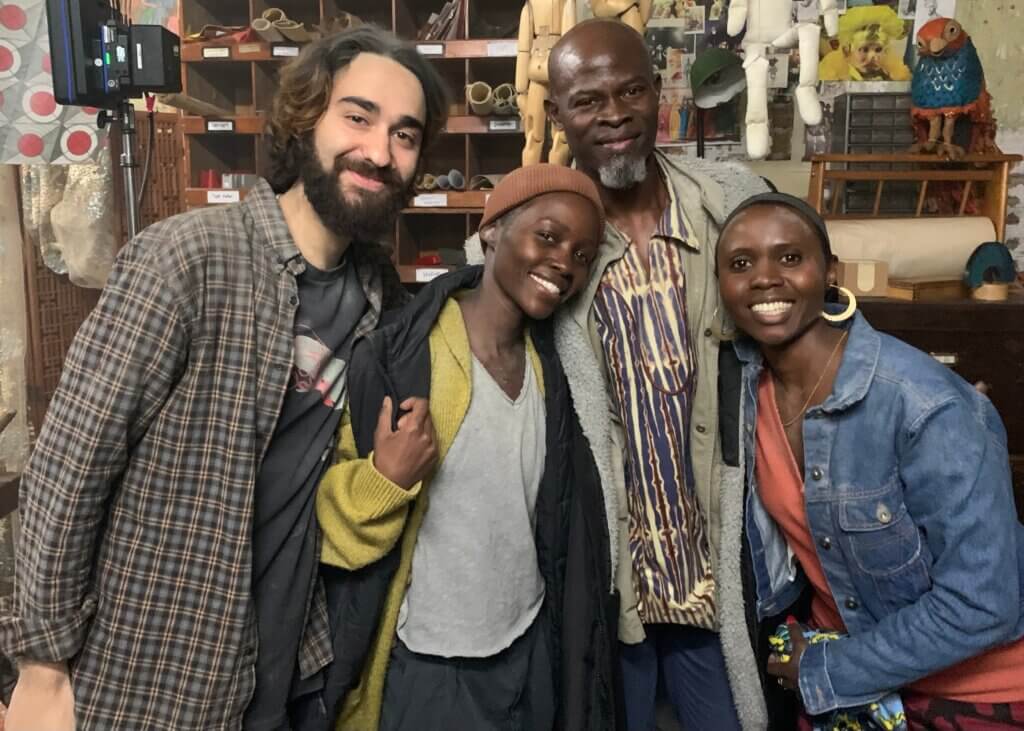
Working alongside Djimon Hounsou and Lupita Nyong’o in A Quiet Place: Day One was, in her words a “life gift.” “There was a part of me that was in awe, but I also embraced the joy of collaborating with my favourite artists,” she says. “Their dedication, discipline, and kindness was inspiring. I left with a bag full of new knowledge.”
Next on Umuhire’s growing slate of international projects, is another high profile film: the Nairobi-set feature Call Me Queen, directed by German-born French-Iranian filmmaker Emily Atef. In the film, Umuhire plays the titular Queen, a Rwandan woman living in Nairobi in 90s during the peak of AIDS pandemic. The story revolves around the friendship between Queen, a 30-year-old single mother from the slums of Nairobi and Anna, an Irish journalist sent to Kenya in 1999.
“It’s a story of self-empowerment and collective strength.” Says Umuhire, “It brings back memories of the dark period in the 1990s, when so many lives were lost to HIV due to lack of access to antiretrovirals. My character, a Rwandan living in Nairobi, reflects how African countries have always welcomed people from other nations without seeing them as a threat. In today’s world, where borders are closing, Call Me Queen is a gentle reminder that we can find solutions together, no matter where we come from.”
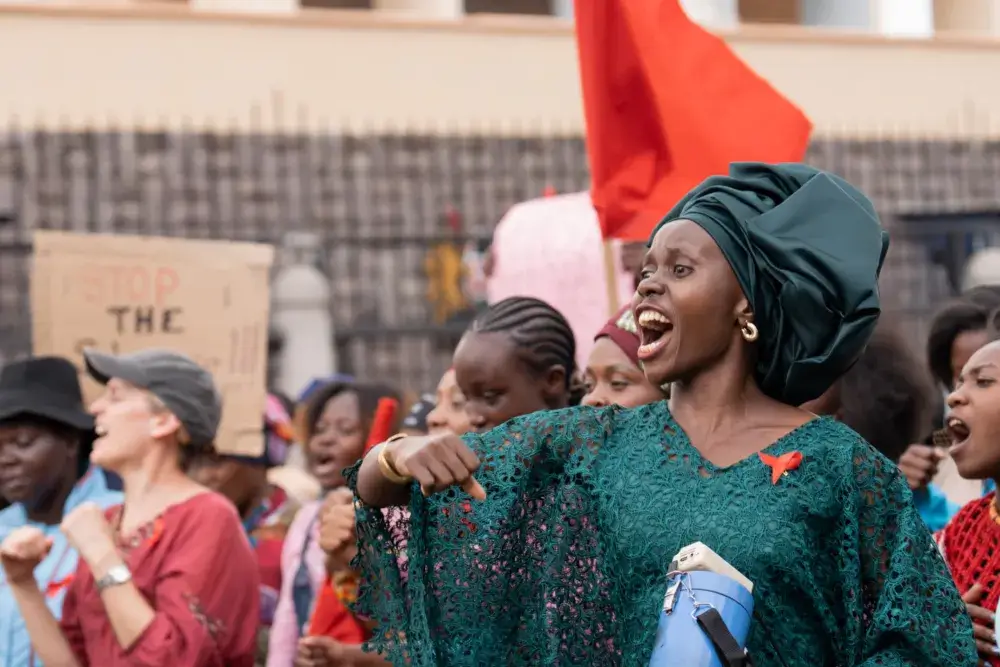
Starring alongside Umuhire are Denise Gough (Andor, Too Close), Dominic West (The Crown, The Wire), Danny Sapani (The Diplomat, Killing Eve), Charlie Carrick (Deep Water, The Apprentice), and Laurent Lafitte (The Takedown, Class Act). The Kenyan cast includes Nice Githinji (Subterranea, The Caller), Michelle Tiren (Nawi, Volume), Lwanda Jawar (Pepeta, Sense8), Gerald Langiri (Nafsi, 40 Sticks), Alan Oyugi (Lusala, Where the River Divides), and Edwin Ekirapa (Monkey Business, Cheza).
Call Me Queen wrapped principal photography in Nairobi in May 2025, and was later presented at the Venice Gap-Financing Market, part of the Venice Film Festival’s Production Bridge, in August.
Umuhire who lives between France and Rwanda, concluded a Rwandan chapter of the sorority initiative Girls Support Girls in Kigali in November. She co-founded the Paris based initiative together with French publicist Karolyne Lebovici and producer Vanessa Djian. “The project came from a desire to bridge my two countries and create connections between Rwandan and French filmmakers,” she says. “This edition was a success, and I’m excited to see the collaborations that will emerge. There are already a few projects in the making, stay tuned.”
EDITOR’S NOTE:
All reporting, interviews, and reviews on Sinema Focus are protected under international copyright law and the Kenya Copyright Act, 2001. No part of this publication may be reproduced, rewritten, republished, or redistributed in any form by media outlets without prior written consent. For reprint or syndication inquiries, contact editorial@sinemafocus.com.
©️ 2026 Sinema Focus / African Film Press. All rights reserved.
Never miss a moment.
Get the latest stories from Sinema Focus delivered straight to your inbox. Subscribe to our newsletter now.