
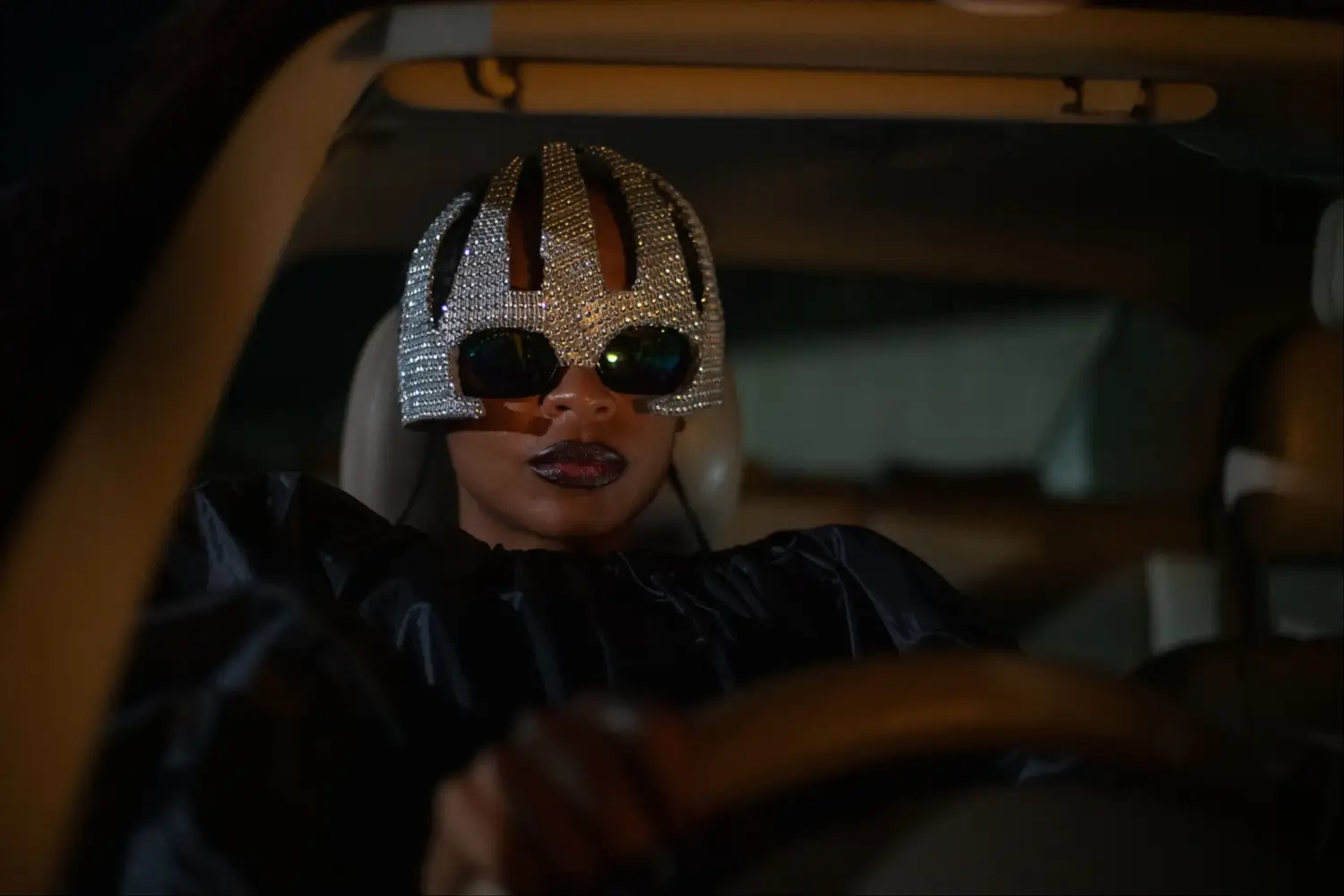
Rungano Nyoni’s On Becoming a Guinea Fowl begins with a confident stride, her voice fully in tune with a striking visual style that eases the audience into a sobering, hypnotic reality. The opening scenes – a slyly funny sequence where Shula, dressed like Missy Elliott in her iconic The Rain (Supa Dupa Fly) music video, stumbles upon her Uncle Fred’s dead body on the roadside – eschew the urgency that would otherwise rupture such a moment. Instead, the film lingers masterfully, summarising in brief and with indelible depth the soul it captures: the tension between levity and the traumatic undertones buried beneath it.
We follow Shula through her family’s house, the streets, and in her car as she is pulled away from the mundanity of a Zoom meeting and thrust into the exaggerated wails and ritualised crawls of her family’s elaborate funeral procession. Refracted through the specificity of Zambian family and funeral customs – yet still deeply familiar beyond them – the rituals unravel into chatter and fragments of memories, cracking open within the shared feelings for the deceased. Slowly, the film pivots into the terrain of silence, complicity, and the generational trauma of sexual abuse.
Stay ahead of Kenya & East Africa’s film and TV.
Get our stories in your inbox — Subscribe to our newsletter now.
What emerges over ninety-five minutes is an explosive yet intimate deconstruction of a patriarchal culture that, though operating in whispers and shadows outside the funeral house, is venerated by the women inside it that they inadvertently become victims of it. Through the silence of a community that can be performatively loud when it wants to be, Nyoni depicts generations of women trapped within a house as they are forced to express the unrestrained depth of their inequitable fragility under the excuse of preparing the funeral of their brother and uncle.
Aptly titled, the film describes the guinea fowl as a noisy bird whose chatter warns others of predators. Nyoni deconstructs the broken lines of communication that kept the ills of one man from ever meeting repercussions in life, and continue to prevent healing in death. Through his many victims, each at a different stage of grieving lost innocence, On Becoming a Guinea Fowl gives the family matriarchy plenty of opportunities to speak loudly and defend one another. Yet, the traditional and familial need for false pretense ultimately turns them against themselves.
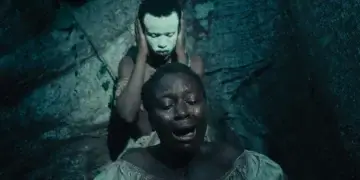
Nyoni’s filmmaking is both delicate and fierce. The soundtrack slips in and out with such caution it goes almost unnoticed, yet it directs the heightened tensions of trepidation. The editing and cinematography give the film a deliberate, almost documentary-like rhythm, balancing uncanny visuals of flooded floors and children’s programming with the familiar chaos of African women crowding around a kitchen counter. It’s in these accumulated details – knee-itching rituals morphing into whispered conversations of men giving their food orders, or the expansive framing of a barely audible exchange between a girl and her father as she wears her own version of reticence – that the true scope of the film comes to its focal crest. My favorite scene: all the aunties crammed into a store with the two eldest daughters of the family, unable to put into words the recognition of hurt, can only sing their love for their children, ushering them into the receptive caress of their repressed wounds.
Strongly anchored by Susan Chardy’s performance as Shula, On Becoming a Guinea Fowl ties together its many facets, connecting humour and anguish with believability – even if Shula’s passivity at times feels frustrating as her own history unravels. Numbed by pain and fractured allegiances to family, her progress out of their echo chambers into becoming the guinea fowl for the next generation culminates in a final reckoning, heightened by the inherited price of familial customs worth fighting for.
Around Shula, the supporting characters – down to the extras – brim with personality and agency, never reduced to mere victims or phony imitations, as they twist themselves naturally in both deed and tongue to uphold the cultural norms that oppress them.
It’s not hard to see why A24 picked up this film even before its world premiere at Cannes in 2024, or why Nyoni won Best Director in the Un Certain Regard section. Her mature introspection and keen observant style, achieved with limited space and so many different flavours of characters blending seamlessly, reveal generations of sociocultural fault lines beneath the fabric of communal life. On Becoming a Guinea Fowl captures the frustrating realities of discourse within African tradition, as documentaries like Zippy Kimundu’s Widow Champion expose, but heightened here with the anxiety of elevated horror akin to Ari Aster’s Midsommar. The film majestically balances the heavy riptides of trauma with humour, expressiveness, and the often-understated tangle of real humans.
Presented by the African Film Press, On Becoming a Guinea Fowl held its Kenyan premiere at Unseen Cinema from Friday 22 August – Sunday 24 August. Update: On Becoming a Guinea Fowl is back at Unseen Cinema from 4 – 15 October.
EDITOR’S NOTE:
All reporting, interviews, and reviews on Sinema Focus are protected under international copyright law and the Kenya Copyright Act, 2001. No part of this publication may be reproduced, rewritten, republished, or redistributed in any form by media outlets without prior written consent. For reprint or syndication inquiries, contact editorial@sinemafocus.com.
©️ 2026 Sinema Focus / African Film Press. All rights reserved.
Never miss a moment.
Get the latest stories from Sinema Focus delivered straight to your inbox. Subscribe to our newsletter now.