
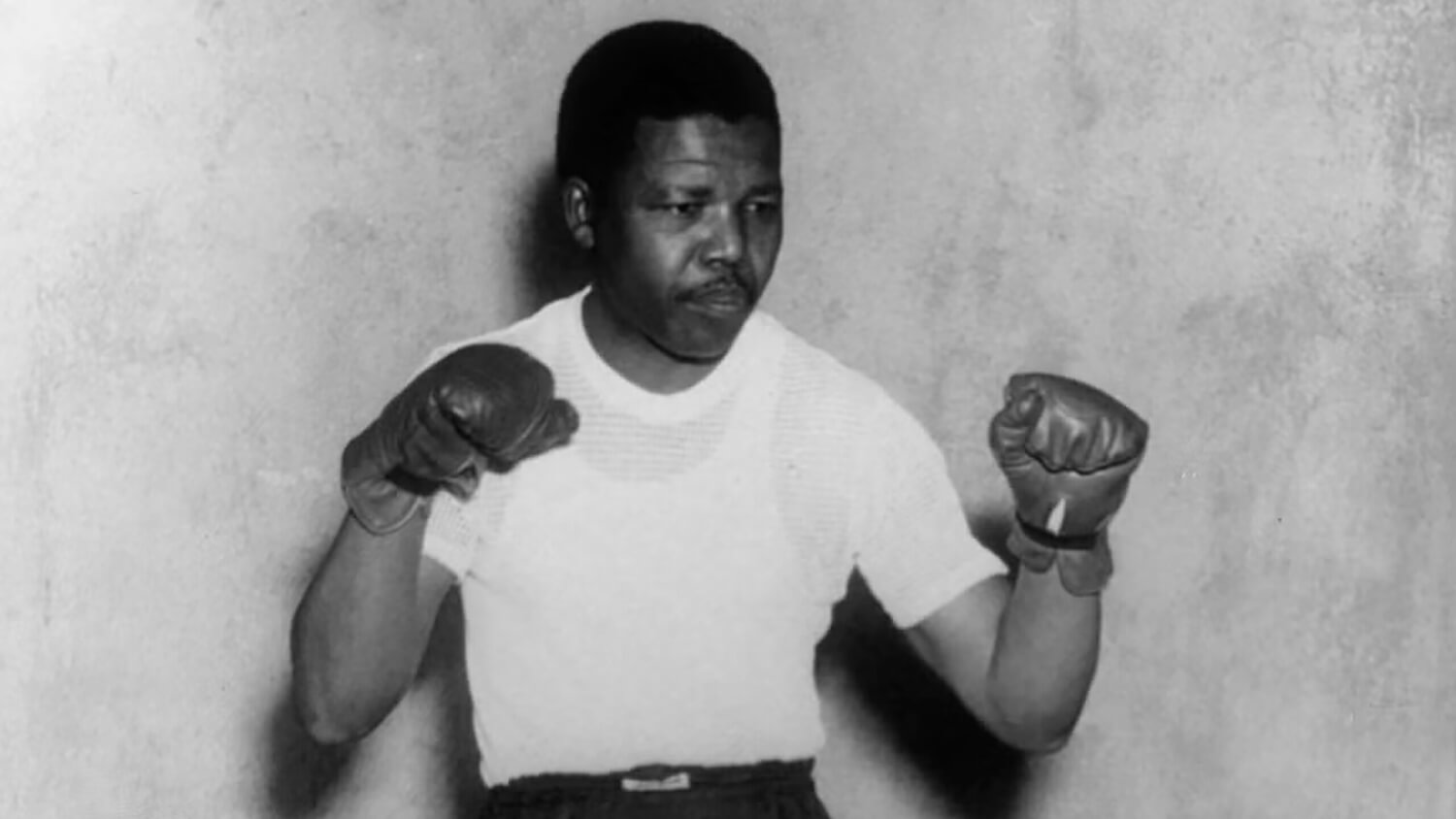
Nelson Mandela, as an idealised institution of emancipation, has long overstretched beyond the story of the man himself. The caricature of Mandela has grown and embedded itself into the very description of freedom and revolution, and the price one exacts from the other. His personal story has been recounted countless times across countless mediums. With Troublemaker, helmed by Training Day director Antoine Fuqua, Mandela’s story is told once more in a film less interested in reverence than urgency.
The documentary does not pretend to unearth unknown anecdotes or radically revise history, choosing instead to define itself through motivations that are pointedly contemporary. By foregrounding Mandela’s warnings about fascism, racialised violence, and state-sanctioned hatred, Fuqua positions apartheid as a recurring template that echoes uncomfortably in modern global politics.
Stay ahead of Kenya & East Africa’s film and TV.
Get our stories in your inbox — Subscribe to our newsletter now.
Using audio recovered from interviews conducted by Mandela’s ghostwriter, Richard Stengel, while writing his autobiography Long Walk to Freedom, Mandela’s own voice narrates much of his life story and evolving philosophies across it. The film blends animated visuals with archival footage captured across his long political and personal career, painting an elaborate picture of both the man and the racist institutions that sought to extinguish his revolutionary spirit. Mandela recounts, with articulate and reverent sincerity, the brutal conditions under which Black South Africans lived under a regime shaped by Nationalist leaders with overt Nazi sympathies. Anti-Black violence, white supremacist ideology, and the normalisation of cruelty are presented through the lived experience of a man who stood at the centre of these forces for more than half a century, forcing implicit parallels with present-day political climates in familiar patterns.
The events themselves have been told and retold across textbooks and recurrent Hollywood films, yet through the soothingly contemplative voice of the man himself, Troublemaker captures a complexity that many recreations have attempted to emulate, with varying degrees of success. Told this way, the film is often gruelling in its simplicity. Mandela and his close collaborator Mac Maharaj, newly interviewed for the documentary, recount grotesque interrogation methods employed by apartheid security forces. These recollections are paired with harrowing evidentiary photographs of South African massacres, an apartheid inhumanity that Fuqua refuses to soften or obscure.
One of Troublemaker’s most prominent intents is in its interrogation of non-violence. At a time when anti-government protests dominate news headlines across the world, Mandela recalls addressing a desperate crowd shortly before his arrest, acknowledging that peaceful protest has limits when faced with regimes that operate on hatred and irrationality. Nearly three decades after touring the continent and the globe preaching racial integration and coexistence, ideas that have shaped the moral foundations of Western democratic ideals since, the film casts a shadow over the long and torturous journey that preceded that freedom, through the eyes and voice of the man who spearheaded the struggle, and who lost just as much time in its pursuit.
Troublemaker earns its title by honouring Mandela’s birth name, Rolihlahla – loosely translated from Xhosa as “troublemaker.” Fuqua frames Mandela as a disruptor, someone shaking the branches binding his people and provoking consequence. With the striking visual language, the film distinguishes itself through the work of artist Thabang Lehobye, whose expressionistic style blends smudged oil paintings with minimalist animation. These illustrations sustain the documentary’s narrative flow where archival footage is unavailable, animating Mandela’s words verbatim in ways far more evocative than traditional talking heads or still-image montages.
The film, however, is not without strain. The familiarity of its subject matter requires a degree of repetition in pacing and thematic progression, one that cannot otherwise be separated from Mandela’s narration. When the film lands its blows to devastating effect, Mandela and Maharaj walk us through their lived history. But in between these moments, the overall structure is bound by familiar documentary rhythms of archival recordings and photographic sequences.
Ultimately, Troublemaker is heavy, provocative, and undeniably relevant, even for audiences well-acquainted with Nelson Mandela’s story. For viewers unfamiliar with his autobiography, it serves as an insightful entry point, elevated by Mandela’s own voice and bold visual experimentation that captures moments of genuine emotional power across his personal and political journey. For the world at large, the parallels it draws between apartheid South Africa and contemporary political movements, both within and beyond Africa, are unsettlingly necessary. The questions it raises on how to deal with those powers are ones that sit at the back of the mind after.
Troublemaker had its world premiere at the 2026 Sundance Film Festival, screening in the World Cinema Documentary Competition.
EDITOR’S NOTE:
All reporting, interviews, and reviews on Sinema Focus are protected under international copyright law and the Kenya Copyright Act, 2001. No part of this publication may be reproduced, rewritten, republished, or redistributed in any form by media outlets without prior written consent. For reprint or syndication inquiries, contact editorial@sinemafocus.com.
©️ 2026 Sinema Focus / African Film Press. All rights reserved.
Never miss a moment.
Get the latest stories from Sinema Focus delivered straight to your inbox. Subscribe to our newsletter now.