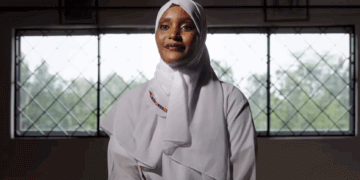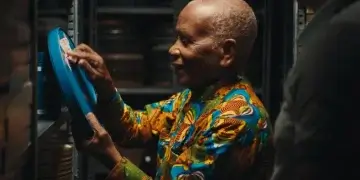

Documentaries rarely come more inventive than Khartoum, a film directed by five filmmakers – Sudan’s Ibrahim Snoopy Ahmad, Timeea Mohamed Ahmed, Rawia Alhag, Anas Saeed, and Britain’s Philip Cox. Production began in 2023 but the filmmakers, forced to flee Sudan after the war broke out, had to adapt to finish their story. The result is a hybrid documentary that blends pre-war footage, animation and green-screen reenactments to craft a work of memory and imagination that remains consistently engaging and profoundly human.
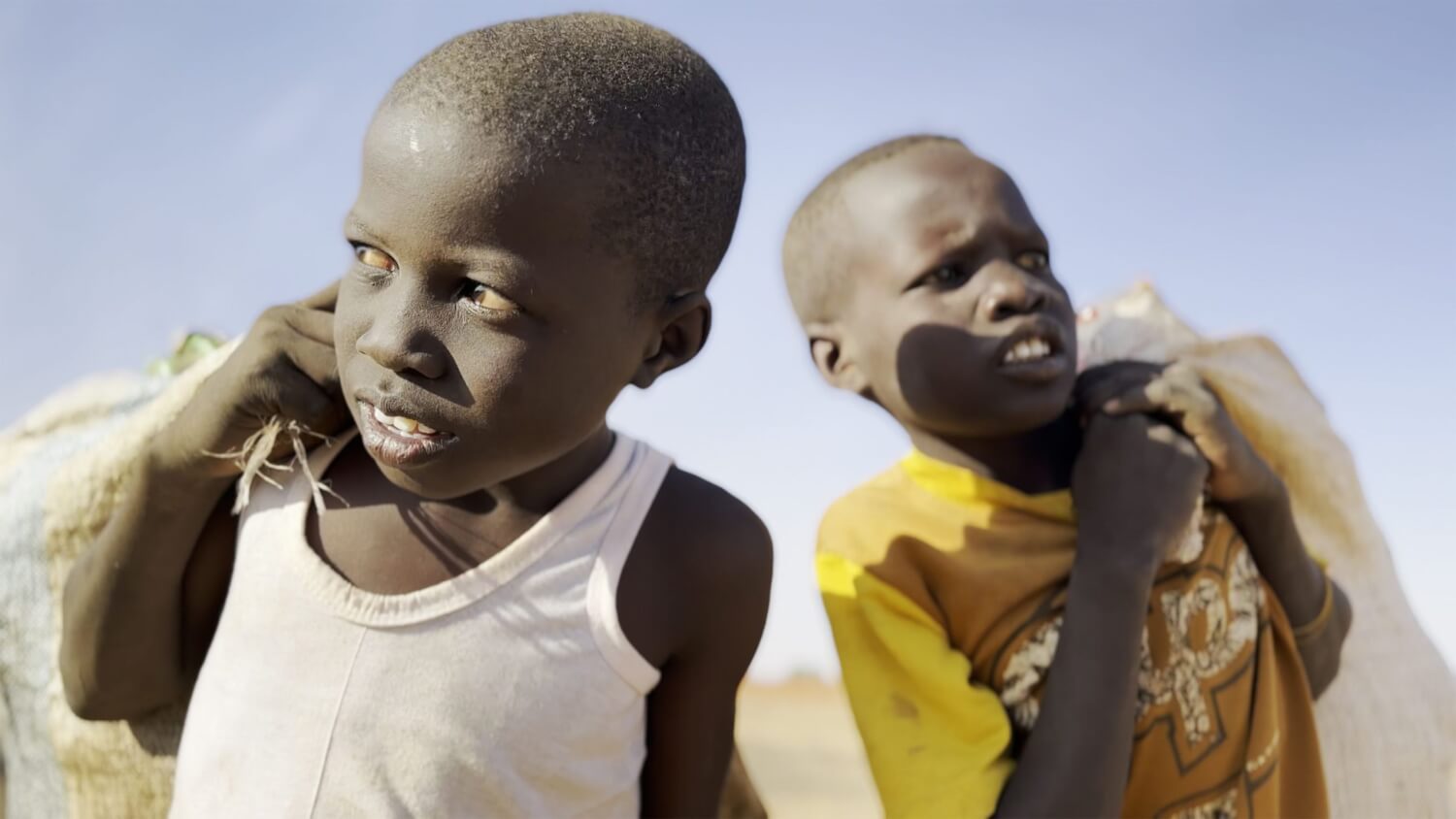
Khartoum follows five Sudanese citizens – a civil servant, a tea lady and single mother, a resistance committee volunteer, and two young bottle collectors – brought together in exile to share their experiences before and during the war. Through reenactments, dreams, and fragments of revolution, they recount their stories of survival, freedom and hope. The result is a collage of perspectives that brings to life, with both horror and beauty, their war-torn home.
Stay ahead of Kenya & East Africa’s film and TV.
Get our stories in your inbox — Subscribe to our newsletter now.
Despite all that’s happening in Sudan, Khartoum resists overt political statements. The complex politics of the country’s ongoing war fade into the background, and instead, the film turns its gaze inward, toward the human cost of conflict and the emotional wreckage left behind. Its focus remains fixed on the eyes and souls of its five participants. Though reconstructed, the green-screen reenactments carry some of the film’s heaviest moments, as each participant narrates and performs, with help from the others, the most unforgettable chapters of their time in Khartoum.
Several times, the artifice breaks. We see the participants in tears as they relive their memories, and the directors step in to comfort them. These moments linger, sometimes raising difficult questions about the ethics of re-creation. Film is, by nature, emotional manipulation, but here the process sometimes feels as though it crosses a line. The reenactments, though essential, even offering moments of healing for both participants and filmmakers, can feel more re-traumatizing than cathartic for those who lived through the war. Yet the vulnerability on display makes the conflict feel more immediate, more real, than any archival battlefield footage ever could.
Visually, the reenactments are striking. Some sequences are rendered with more artistry than others, making the film uneven at times, but its emotional intensity never wanes. The participants cry, joke, and smile in equal measure. In one unforgettable story, the resistance committee volunteer recalls a bus ride with a young woman on the eve of war. Bathed in blue moonlight and stylized animation, the scene radiates nostalgia, a glimpse of innocence before collapse. It’s a reminder that war is not a distant phenomenon; it can happen anywhere, to anyone.
At the 2025 Nairobi Film Festival, Wilson and Lokain, two of Khartoum’s youngest participants, watched the film before an audience for the first time. Once bottle collectors as a way of survival in Sudan, they now attend school in Nairobi, not far from the theatre where their story was shown. Watching them onscreen, it’s impossible not to marvel at children’s capacity to carry pain and sorrow without letting it harden them. They endured everything the war could take from them, yet their spirit feels untouched. Lokain and Wilson remain two of the film’s most cheerful presences. You fear that innocence will fade, but it doesn’t. They joke about skipping school in Nairobi the same way they joke about dodging RSF bullets back in Sudan. Their humour becomes a kind of resistance, a grace that transforms survival into something almost sacred.
Anyone who can draw tears from an audience through laughter deserves more than this world has to offer.
Most of the film’s participants have now relocated to Kenya. In an epilogue, Khartoum revisits them, tracing the transformation their lives have undergone. Again, the focus remains on the people, not the place. Khartoum itself is left behind, yet it’s a striking irony that despite this, Khartoum leaves you with a sense of having known the city inside and out through the people who once called it home.
Khartoum screened at the 2025 NBO Film Festival that ran from 16-26 October.
Check out our full coverage of the 2025 NBO Film Festival here.
EDITOR’S NOTE:
All reporting, interviews, and reviews on Sinema Focus are protected under international copyright law and the Kenya Copyright Act, 2001. No part of this publication may be reproduced, rewritten, republished, or redistributed in any form by media outlets without prior written consent. For reprint or syndication inquiries, contact editorial@sinemafocus.com.
©️ 2026 Sinema Focus / African Film Press. All rights reserved.
Never miss a moment.
Get the latest stories from Sinema Focus delivered straight to your inbox. Subscribe to our newsletter now.