
The McMillan Library is positioned in such a uniquely anomalous place in Nairobi’s CBD that walking directly towards it, its imposing edifice feels perfectly central to the structures around it, as if the city sprouted in its wake. Yet, when viewed from any other angle along the same streets, it’s too easy to completely miss its grand majesty, mistaking it for just another building in the maze of the city.
The same can be said about How to Build a Library, a film by Maia Lekow and Christopher King (The Letter) documenting the McMillan’s restoration, filmed over eight years. Taken in totality, it describes in nuanced detail the history of the library and the effort to deconstruct its meaning in contemporary Kenyan society. Yet when viewed through the many segmented ideas it embeds, both the library itself and the spirit of a library don’t always come into focus as clearly.
Stay ahead of Kenya & East Africa’s film and TV.
Get our stories in your inbox — Subscribe to our newsletter now.
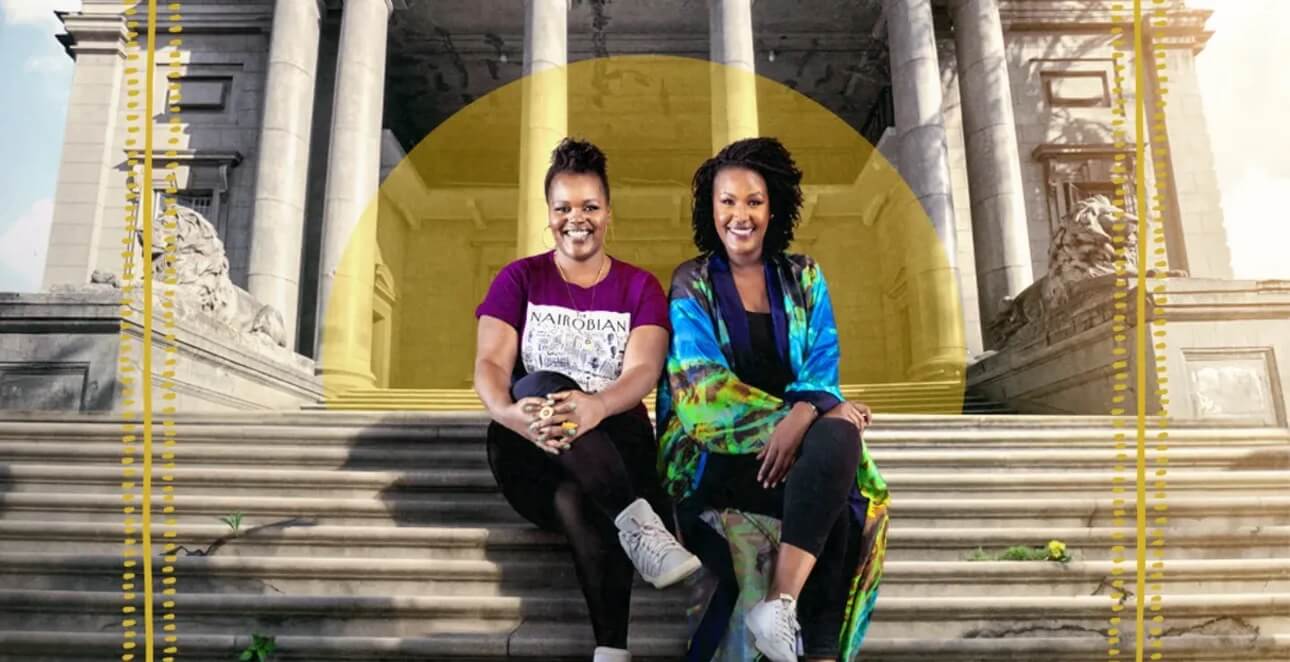
Centered around two women, Shiro Koinange and Angela Wachuka, who combine their strength, patience, and resilience to spearhead the Book Bunk, an organisation commissioned by the county government to revitalise the McMillan Library and two of its branches in Kaloleni and Makadara. Their personalities radiate throughout the film, anchoring their struggle to raise and maintain the funds needed for this massive undertaking, serving as the film’s focal point amid a narrative with many interweaving threads intersecting at the library. Yet, with a clear effort to put their work on the forefront, their personal lives are scarcely introduced beyond their professional backgrounds.
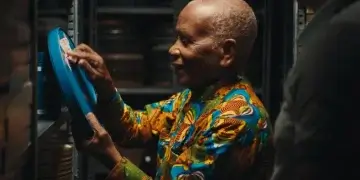
Without deeper personal experiences to follow, the ghosts of the library take centre stage, from its colonial foundation to the neglect it has suffered at the hands of local authorities, harbouring both the lingering resentments of anti-colonial sentiment and the frustration toward bureaucratic and corrupt local governance. Through Shiro and Wachuka’s efforts, the library’s many archived memorabilia are dusted off to reveal a history both known and unknown, one that contextualises the past and present through the restorers’ meditative musings and archival footage while bridging the needs of information and education for the future generations, for whom whatever is unearthed could hold the most meaning.
For a film titled How to Build a Library, it doesn’t do enough to showcase the community that makes a library what it is. Books, paintings, and polished structures are nice, but a library is equally defined by the people within it. The film seems aware of this fact, weaving in an understated tension between librarians and restorers and including sweeping shots of children using the libraries or book fairs within its walls, but these moments are too few.
Still, in those instances when it turns its gaze towards the people – the patrons who use the libraries, conversations with parents, in glimpses of documents and photographs discovered during digitisation, in small debates about book categorisation or the smile of a teenager asking when the library will be finished, How to Build a Library shines. In these moments, it finds humanity and reverence for the institution of libraries.
However, when it stretches its exploration into more impressionistic idealisations of the library, more concerned with decolonizing and refurbishing its blemished past than appreciating its presence in the present, the film steers away from its emotional core. It begins to resemble an ad campaign for more funds, even “making up” the building for a masquerade auction party in almost the same spirit as those who segregated the library a century ago.
On the other side, Shiro and Wachuka face the bureaucratic inertia and corruption of a revolving door of incompetent institutional leadership that forces the women to seek alternative pathways for their mission. A pathway that finds local donors insufficient and foreign aid that insists they cooperate with the same government that hinders their progress.
Through their many efforts and their laser-focused commitment to reinstating these libraries, they endure everything from listening to government officials reveal their own incompetence to reconciling their discomfort at hosting King Charles, an act ideologically at odds with the film’s themes.
Despite its sharp condemnations of colonial powers and of those who inherited their indifference to the wellbeing of the common man, the film decorates the libraries to host foreign funders, government officials, and even the royal family. While this may indeed reflect the practical realities of “building” a library, it ultimately takes too much attention away from those the library is truly meant for: the people.
One of the film’s most powerful moments arrives when the Governor of Nairobi Johnson Sakaja is handed an archived newspaper article from the 1970s about his late mother, overwhelming him with emotion. What would How to Build a Library look like if it were composed of such moments: personal tributes still growing inside this building despite its past, a connection between the past and the future, bridging what was lost with what has been rebuilt, and more importantly, passing over the library to its new users?
The restoration of the McMillan Memorial Library remains incomplete due to unfulfilled promises by the county government, and so by the time the film ends, we never get to see the complete vision the Book Bunk had for this particular monument of history, or how the new “decolonized” space would have risen to truly meet the pulse of a vibrant, modern city. In its epilogue, I would have loved to see the full immersive infusion of what this ambitious endeavour to build a library does to the communities who rarely have the privilege of such services, like those in Kaloleni and Makadara. Instead, How to Build a Library concludes outside the walls of the library into the streets with Gen Z protesters overlooking the grand building, unaware of its presence.
For Shiro and Wachuka, their effort is a thankless job that may never be fully appreciated, restoring the soul of one of Nairobi’s most beautiful buildings by creating a library of new generations of stories, ideas, history, and community that will outlive them.
How to Build a Library is screening at the 2025 NBO Film Festival which runs until 26 October.
Check out our full coverage of the 2025 NBO Film Festival here.
EDITOR’S NOTE:
All reporting, interviews, and reviews on Sinema Focus are protected under international copyright law and the Kenya Copyright Act, 2001. No part of this publication may be reproduced, rewritten, republished, or redistributed in any form by media outlets without prior written consent. For reprint or syndication inquiries, contact editorial@sinemafocus.com.
©️ 2026 Sinema Focus / African Film Press. All rights reserved.
Never miss a moment.
Get the latest stories from Sinema Focus delivered straight to your inbox. Subscribe to our newsletter now.