
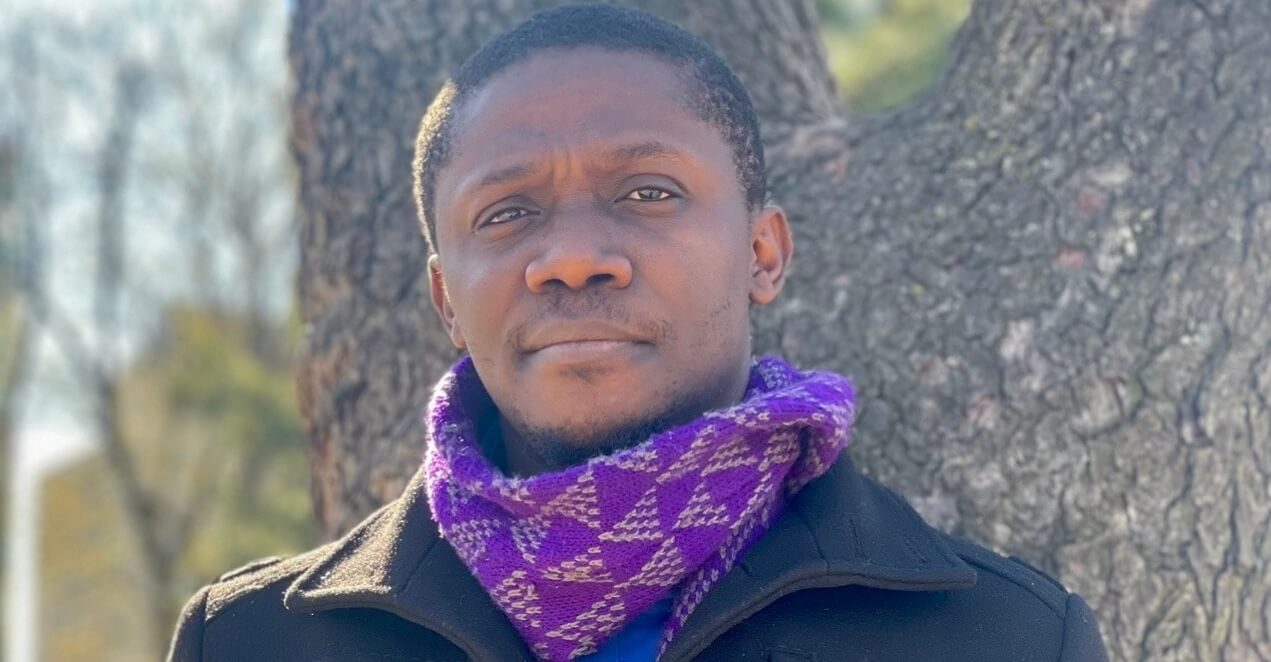
For Nigerian filmmaker C.J. “Fiery” Obasi, cinema has always been more than storytelling — it’s ritual, rebellion, and revelation. From his zero-budget horror debut Ojuju to the monochrome mythology of Mami Wata, Obasi has built a body of work that challenges conventions and reshapes how Nigerian films – often reduced to the country’s popular Nollywood – are seen and felt.
When Mami Wata premiered at Sundance in 2023, it was lauded for its beauty and daring cinematic approach, winning the World Cinema Dramatic Cinematography Award. It was also nominated for Outstanding International Motion Picture at the NAACP Image Awards and for Best International Film at the Film Independent Spirit Awards, among several other accolades.
Stay ahead of Kenya & East Africa’s film and TV.
Get our stories in your inbox — Subscribe to our newsletter now.
The success for Mami Wata came as no surprise for Obasi. “I can honestly say that everything the film achieved was what I hoped and believed it would,” the filmmaker reflects in an exclusive interview with Sinema Focus. “But what never ceases to surprise me is the sincere and enthusiastic response it keeps receiving. It’s not something I can ever get used to, or take for granted.”
Obasi is already shooting his next film, La Pyramide. The portion of this multicultural film shot in Salvador, Brazil will be presented as a Work-in-Progress at the Red Sea Souk – the market arm of the Red Sea International Film Festival – in December in Jeddah, Saudi Arabia, exactly one year after it was selected as a project in development. “There are still remaining Salvador and São Paulo scenes we are yet to film, as well as the New Orleans and Senegal portions,”Obasi says.“La Pyramide is a diaspora, cross-continental, multi-cultural mystical voyage. And that’s all I really wish to say at this moment.”
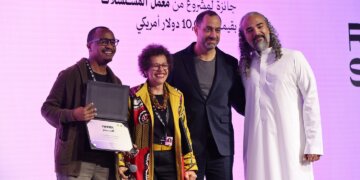
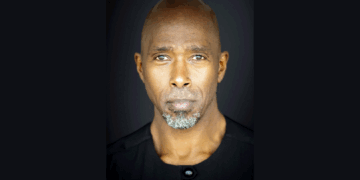
Among the film’s collaborators is American-Ugandan actor Ntare Guma Mbaho Mwine (The Chi, The Lincoln Lawyer), whose involvement, Obasi notes, was a long time coming. “My first award as a filmmaker was presented by Ntare at AFRIFF 2014, when Ojuju premiered,” Obasi recalls. “We kept in touch, and he once suggested I think of him for future projects.” Several years later, that project was Mami Wata. Obasi offered Mwine the role of Jasper but it ended up being played by Nigerian actor Emeka Amakeze. “Budget was one of the reasons it didn’t happen,” Obasi says. “When Mami Wata was released in cinemas across the United States, Mwine went to see it in Los Angeles and later told Obasi he wished he had taken the part. “So now, with La Pyramide, the fates have aligned. Strangely enough, while I was planning to shoot in Salvador, I found out Ntare would be there at the same time. Sometimes, you just have to listen to the signs.”
In a recent interview at the 2025 NBO Film Festival in October, Mwine, whose own film Memories of Love Returned was screening at the festival, spoke with admiration for Obasi and the collaborative future they’re building together. “We worked together recently, and we are hoping to keep building on that,” Mwine said.

Obasi’s decision to push La Pyramide forward without the long development and funding process that preceded Mami Wata reflects both instinct and strategy. “As I said, sometimes you just have to listen to the signs,” he insists. “My whole career, I’ve been blessed to have producers who think outside the box when it comes to financing and realising my personal projects. Films like Mami Wata and La Pyramide can be hard to pitch, especially in a world where the very basic and traditional are considered safe. We decided it would be smarter to start making the film and show the vision. It’s a smart, maybe even genius, approach to financing independent auteur visions. Now, folks can see it’s a moving train. You can either hop on or watch it fly past you.”
At the Red Sea Souk, La Pyramide is among the four projects being presented as Works-in-Progress. The others include Algeria’s The Last Days of RM by Amin Sidi-Boumédiène; Egypt’s The Prodigal Son by Rani Massalha; and Rwanda’s Benimana by Marie-Clémentine Dusabejambo.
Recently, Obasi and his producer and wife Oge Obasi made the decision to move to Kigali, Rwanda, with their family, a move that reaffirms his love for the continent.
“I love living in Africa,” he says. “When we made Mami Wata, we lived in Benin Republic, a country we love dearly. Now it’s Rwanda. It’s a beautiful country, and I believe it’s inspired us to create groundbreaking projects here. Rwanda is very open to innovation and creativity, perhaps more than most African countries, and we look forward to exploring those possibilities.”
Obasi is already collaborating with Rwandan creatives on various projects, including this year’s Locarno Open Doors spots, which he shot in Kigali. “There’s so much talent and potential here,” he says. “Sometimes I feel like there’s potential left on the table in Rwanda. In Nigeria, we learned to do a lot with very little. Nollywood and the New Nigerian Cinema are testaments to that, even musically through Afrobeats is a testament to this fact. We achieved all of this despite limited resources and structure. Imagine if we had some of the structure that countries like Rwanda enjoy. Both countries, even both regions, have so much to learn from each other.”
Despite his move to Kigali, Obasi remains deeply connected to Nigeria through Surreal16, the avant-garde collective he co-founded with fellow filmmakers Abba Makama and Michael Omonua. Together, they run the S16 Film Festival which is rapidly gaining a reputation as Africa’s hub for alternative cinema. “It isn’t just a festival anymore, it’s a movement,” Obasi says. “We started it to showcase cinema outside of Nollywood, not to diminish the mighty Nollywood, but to show that Nigeria, a country of 230 million, offers a diverse cinematic palette. Throughout history, there’s always been a group of filmmakers who decide there must be a new way of doing things.”
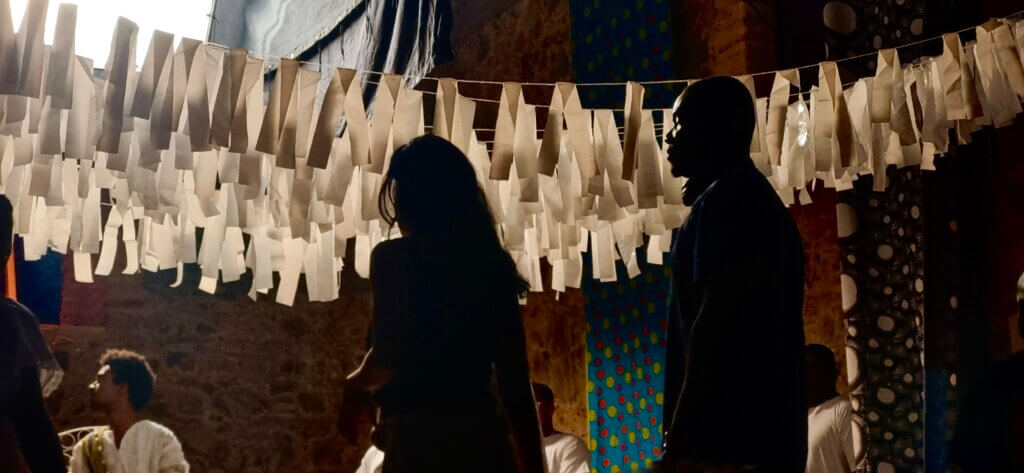
Obasi notes that Surreal16 draws inspiration from the revolutionary film movements that changed cinema worldwide. “That’s how we got German Expressionism with Lang and Murnau, Italian Neorealism with Fellini, Antonioni and De Sica, and the French New Wave with Godard, Varda, and Truffaut, even New Hollywood with Coppola, Malick and Scorsese,” he says. “What we’re doing in Nigeria might feel new on the continent, but it’s part of the same global conversation. I don’t see Kigali and Nigeria as separate; they’re both part of a bigger picture for African cinema. I’m no politician, but I know the power of cinema and that’s why we push.”
This December, during the 5th edition of the S16 Film Festival, the inaugural Critics’ Prize will be presented by the African Film Press, a pan-African alliance of which Sinema Focus is a member, alongside Nigeria’s What Kept Me Up and the Pan-African platform Akoroko.
EDITOR’S NOTE:
All reporting, interviews, and reviews on Sinema Focus are protected under international copyright law and the Kenya Copyright Act, 2001. No part of this publication may be reproduced, rewritten, republished, or redistributed in any form by media outlets without prior written consent. For reprint or syndication inquiries, contact editorial@sinemafocus.com.
©️ 2026 Sinema Focus / African Film Press. All rights reserved.
Never miss a moment.
Get the latest stories from Sinema Focus delivered straight to your inbox. Subscribe to our newsletter now.