
When I take a third-row seat at Jain Bhavan auditorium on Sunday afternoon, I feel queasy, like I’m not supposed to be here. What do I really know about gender-based violence beyond what I see in the news? What guilt will I walk out of this auditorium with should I sit through the 2-hour play and still not understand, truly understand?
As a man, to move through the world as a woman is an experience I can only imagine but will never comprehend. I’m not saying this to sound particularly empathetic or self-aware. I’m simply admitting a fact, and the fact is, I don’t know what it feels like to have a human experience in the world as a woman.
Stay ahead of Kenya & East Africa’s film and TV.
Get our stories in your inbox — Subscribe to our newsletter now.
Here’s another fact: Gathoni Kimuyu’s immersive play Free Me, staged from 28 to 30 November, doesn’t need us to understand what it means to be a woman experiencing violence. The play simply needs us to believe women when they say they’re being abused by the men who profess to love them. It needs us to understand that domestic abuse is nuanced, presenting in different faces, colours, sounds, tears, heartbreaks, backaches and scars. Free Me asks us to recognise that abuse doesn’t follow axioms. It doesn’t just happen, and it doesn’t simply appear like dusk.
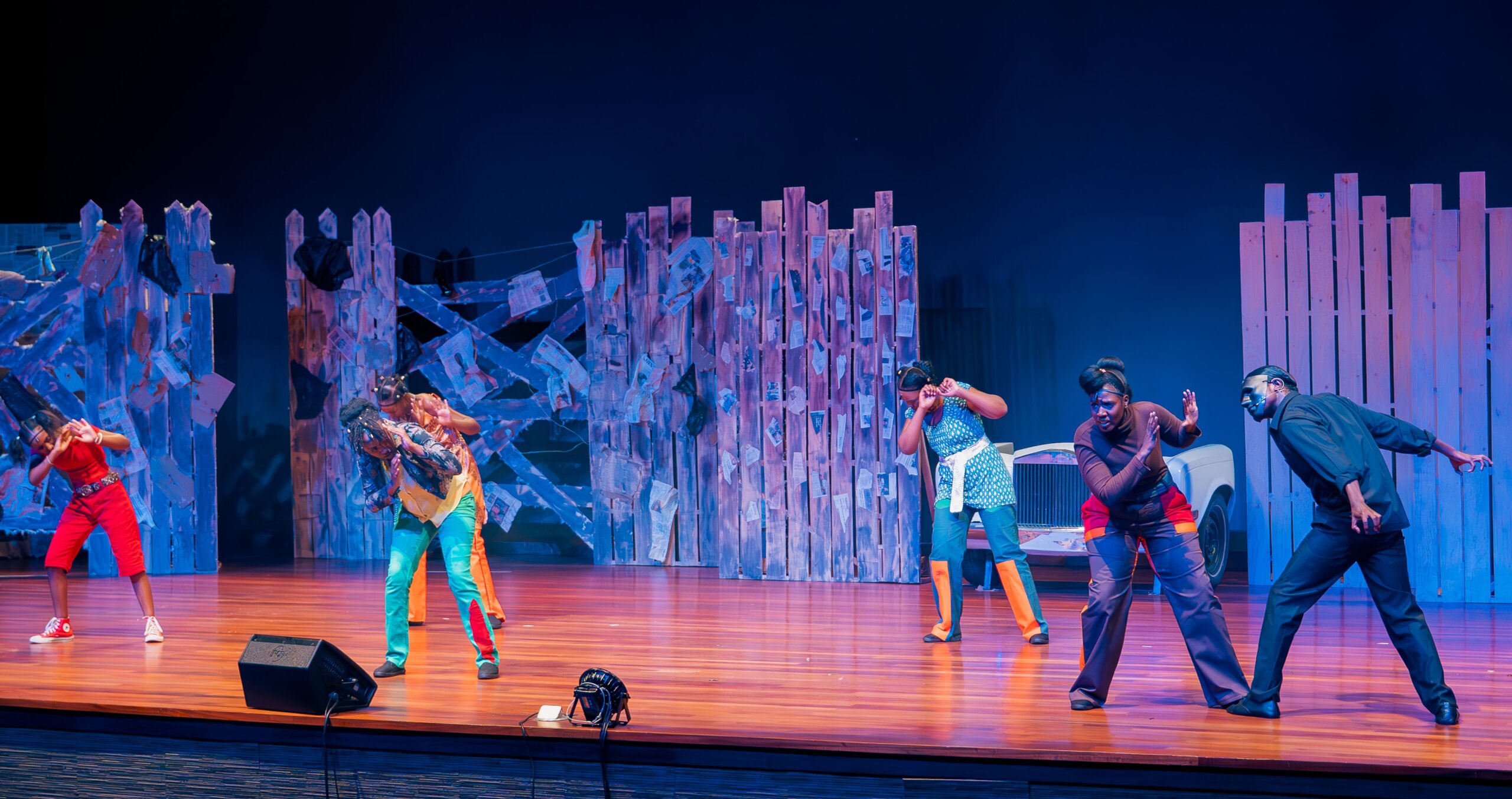
From a stripped-down stage washed with hypersensory lights, five actors – Nungari Kiore, Gathoni Mutua, Renee Gichuki, Joan Cherono, and Ellah Maina – each playing a variant of Gathoni, explore the microcosms of abuse and lay them bare. They show how abuse is systematic and intrinsically embedded in society. Abuse is not male nor female, it’s not young nor old. It affects us all as a society, and changing the narrative means recalibrating a culture that “believes only the eyes, never the ears.”
The play explores how mothers who are supposed to understand the plight of other women take the side of their violent sons over the women they abuse. It forces us to confront how women themselves perpetuate patriarchal norms that enable GBV.
But harrowing as it is, Free Me doesn’t vilify men (even when a character addresses us as “Ladies and disappointments”). It doesn’t seek to stir a gender war. It’s not provocative for spectacle or a pity party. Instead, it asks us to believe there’s more than 40% chance the woman seated beside you has experienced gender-based violence at some point in her life. It doesn’t say, “Come see all these scars in my body.” Rather it invites the audience into a naked conversation about the wounds that bore the scars, so they can recognise their own wounds and know they can heal too.
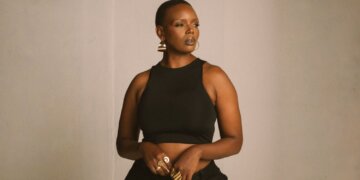
Written by Saumu Kombo and Mercy Mutisya, from a 2018 mini-biography by Magunga Williams, Free Me is based on the real-life story of its producer Gathoni Kimuyu, who survived her abusive marriage. Anchored by the five women on stage, the playtraces Gathoni’s journey across different life stages: from a bouncy teenager with air under her feet, to a 25-year-old in a violent marriage, and then a 31-year-old woman rebuilding her life after escape and survival.
Having five performers play Gathoni is the biggest artistic risk Free Me takes, and also its most rewarding. Together, these women create a composite consciousness, capturing the fragmented psychological journey of GBV survivors: the self before violence, during violence, after violence, the self who stayed, the one who fled, the one who survived.
Gichuki holds Gathoni’s teenage exuberance, the self with air under her feet. Cherono plays the version of Gathoni who rationalises, who excuses, who negotiates with danger. Maina channels Gathoni’s emotional disorientation, a woman who doubts her own perceptions. Kiore anchors the intellectual, reflective Gathoni, the one trying to understand the violence structurally. And when Mutua, the most experienced performer in the ensemble, takes her turn, she becomes a hurricane blasting out of the cage, the post-escape Gathoni who has rediscovered her light and is learning to rebuild.
The writers employ a dynamic mix of poetic “sorority-esque” outbursts, narrative retellings, and direct-address monologues to weave a story that goes beyond personal catharsis into staged activism that demands accountability from the societal systems that oppress women. The dialogue is a colourful embroidery of frivolity and gravitas, philosophical and pragmatic; elevating even the most overt and didactic socio-political commentaries into impressionistic moments of reflection and restoration.
Stylistically, director Mugambi Nthiga opts for a melodramatic performance that eschews pathos. Not once do we pity Gathoni as a character. We fear for her, we root for her, we laugh and cry with her, but never pity her.
What I found most interesting – and I wish I knew if anyone else felt the same – was the sense that Free Me was designed, blocked, lit, costumed, sounded, and performed like a live operatic orchestra. The play begins and ends with the five Gathonis harmonising in a poetic chorus. There is a fluid harmony to how they step in and out of the character, almost like a ballet of subtle movements, like passing a spotlight between opera singers. In this, the play mirrors how healing from GBV requires community, not solitary effort.
Mugambi is keen not to sensationalize violence, so all the raw, graphic violent scenes are choreographed as a dance, playing against a rather dreadful, ominous soundtrack under a barrage of red lights. This is deliberate choice to shift the discourse around GBV in the Kenyan society, especially in the media, where focus is often on gore, injuries and death. Free Me instead focuses on patterns, systems, psychology and the normalised red flags that makes GBV a cultural epidemic.
Props to Tobit Tom, who directs the choreography and also plays Prince, Gathoni’s abusive husband. The only man on stage, Tom wears a black mask that conceals his whole face. This anonymity is one of the production’s smartest decisions because by masking Gathoni’s abuser, Free Me shows us that an abuser could be anyone: the charming boyfriend, the God-fearing husband, the rich, the poor. It tells us the problem is not “this single abuser”, but the society that emboldens him and enables abuse.
Tom’s character is impeccably written. It would have been easy, welcomed even, to make him an easy meat, to minimise and mock him to show how ridiculous abusers are. Instead, he is written and performed as a fully fleshed, dynamic human, however reprehensible he may be. He is dynamic enough that we can hate everything he is and represents, yet still restrained to allow Gathoni’s full range to unfold.
When you are living in an abusive marriage, “what does the tipping point look like?” the play poses rhetorically in the end. What grand change of events led Gathoni Kimuyu out of the door? The rediscovery of the light within her, the play tells us. Once you’ve discovered your light, you cannot help but triumph over darkness. And that, ultimately, is what Free Me is about: survival, healing and growth.
EDITOR’S NOTE:
All reporting, interviews, and reviews on Sinema Focus are protected under international copyright law and the Kenya Copyright Act, 2001. No part of this publication may be reproduced, rewritten, republished, or redistributed in any form by media outlets without prior written consent. For reprint or syndication inquiries, contact editorial@sinemafocus.com.
©️ 2026 Sinema Focus / African Film Press. All rights reserved.
Never miss a moment.
Get the latest stories from Sinema Focus delivered straight to your inbox. Subscribe to our newsletter now.