

It feels like just yesterday we were reflecting on how Kenya’s film, TV and theatre industry fared in 2024, celebrating milestones while pondering the what-ifs and missed opportunities. It was a year that, despite persistent challenges in infrastructure, structure, and policy, carried a sense of optimism, as if the pieces were beginning to fall into place. Six months down the line, how is the industry looking? The truth: the first half of 2025 has been a mixed bag.
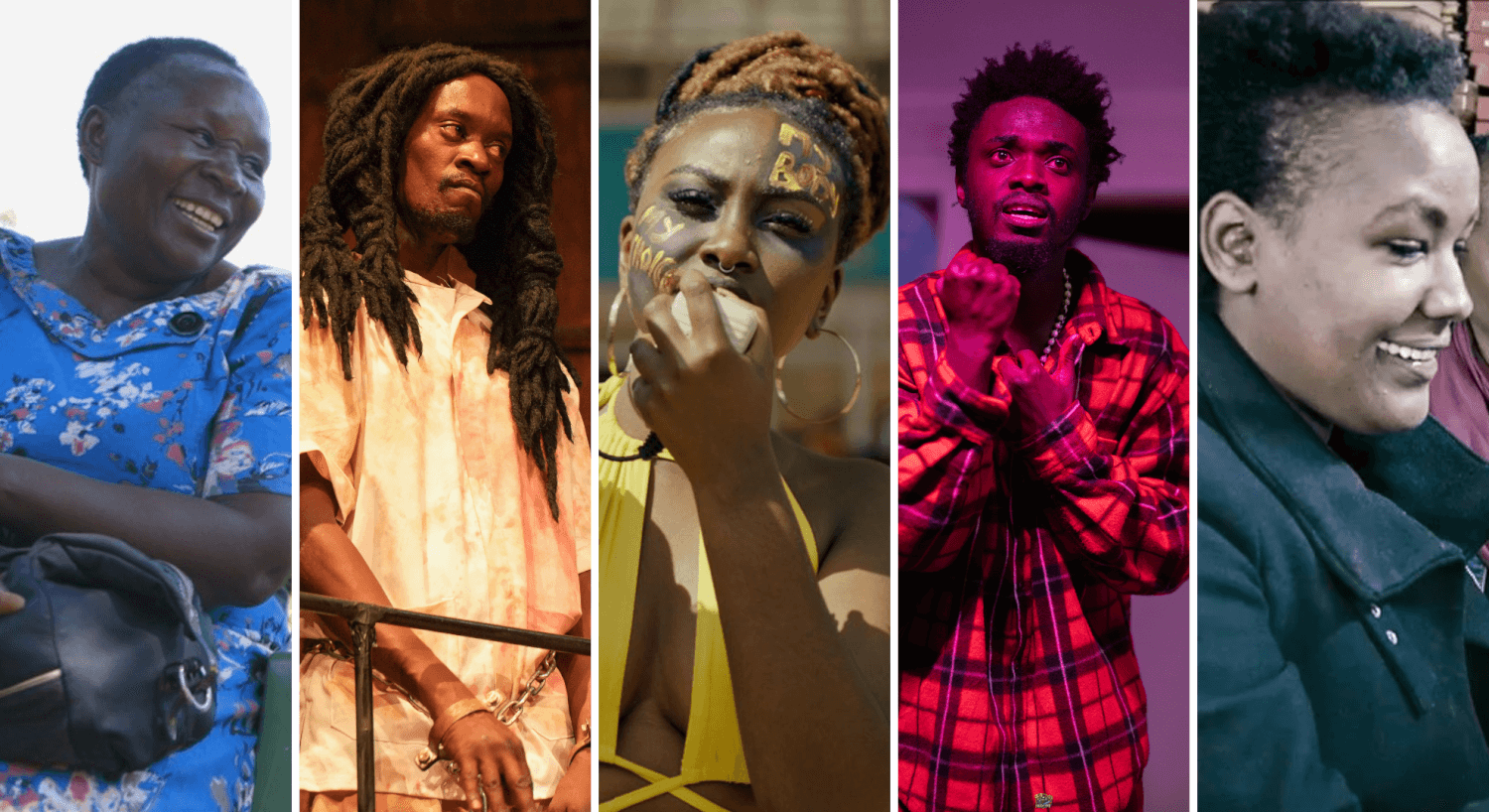
Theatre proved to be the most dynamic space so far, becoming the battleground for the pulse of the nation as it carried the weight of its anxieties, frustrations and hopes. While the medium has always been active – especially in its post-COVID resurgence – the first half of the year saw a deliberate and defiant shift, a renaissance driven by sharp socio-political commentary. Revivals like Stuart Nash’s The Trial of Dedan Kimathi, Too Early for Birds’ Badassery, Francis Ouma’s solo act It’s Such a Good Time and even the Christian theatre outing Bad Girls of the Bible – a bold, contemporary spin on the Good Book’s most notorious women – dominated the stage.
Stay ahead of Kenya & East Africa’s film and TV.
Get our stories in your inbox — Subscribe to our newsletter now.
And it wasn’t just on the national stage; even high school stages became arenas of resistance, like in the case of Butere Girls’ play Echoes of War, which was banned from participating in this year’s Kenya National Drama Festival – sparking nationwide outrage over censorship and creative freedom.
By contrast, cinema felt far less charged, with releases ranging from rom-coms like Sayari and Love & Coffee to Tosh Gitonga’s Inside Job and MultiChoice Talent Factory projects Deadbeat and The Immersive Alarm. Other titles included the psychological drama The Yellow Dress, set in post-independence Kenya; Sarah, which leaned more toward NGO PSA than cinematic art; Bobo, which premiered at the Jo’burg Film Festival under a partnership with Showmax; Nyamula, which debuted at IFFR; and two standout documentaries Widow Champion and How to Build a Library.
Zippy Kimundu’s Widow Champion and Christopher King and Maia Lekow’s How to Build a Library premiered to rave reviews at Tribeca and Sundance respectively. Our own critic Kelvin Kariuki hailed Widow Champion as “a patient, precise, and piercing” documentary that “honours the pain and power of the women at its centre and brings to light conversations that urgently need to be amplified.” Omar Hamza’s Sayari delivered a predictable yet charming rom-com, while the rest of the releases were largely lukewarm and forgettable, leaving little to write home about.
On television, no show made a strong critical impression but some sparked conversation for different reasons. As the first Kenyan project on Netflix in 2025, Kash Money came with enough buzz but ultimately lacked the narrative strength to hold its pieces together. Meanwhile, MTV Shuga Mashariki – returning to Kenya after 15 years with high expectations, heavy publicity and buzz, and a vibrant young cast – delivered impeccable production quality and spectacle but fell short in interrogating the deeper social issues it aimed to tackle. On Showmax, The Chocolate Empire became a fan-favourite thanks largely to its risqué appeal.

This all begs the question: with such uninspired and generic titles in the first half, is there hope for more ambitious TV in the months ahead? It’s hard to say.
It was in the second half of 2024 that Showmax gave us Subterranea which broke new ground as Kenya’s first sci-fi series. But then again, with dwindling budgets, it’s becoming increasingly unlikely that we’ll see something as experimental or as different as Subterranea, or as gritty as Pepeta, anytime soon. Instead, Showmax appears to be doubling down on reality programming, telenovelas and risqué dramas with South Africa’s imports like Mommy Club NBO, shows like The Chocolate Empire, and long-format dramas like Reckless. Noticeably absent from the 2025 slate are February-March staples like The Real Housewives of Nairobi and Single Kiasi.
This could be tied to larger strategic changes at MultiChoice, which owns Showmax and is currently awaiting final regulatory approval for its acquisition by French media giant Canal+. The R35 billion (approximately $1.9 billion USD) deal, which is expected to be finalised in October, will give Canal+ a controlling stake in MultiChoice, signaling a major shake-up in Africa’s streaming and pay-TV landscape. As the industry awaits with bated breath what this acquisition will mean for filmmakers and actors across the continent, the uncertainty around this transition may explain Showmax’s more cautious approach to spending in Kenya – at least in the short term.
Showmax isn’t the only streamer in a flux. Netflix, once aggressive in commissioning bold African originals from some of the continent’s biggest players, has also scaled down significantly. The streamer’s uncertain strategy in Kenya – or lack thereof – has been a subject of debate for some time, especially since no release has matched the ambition and scale of Country Queen, which premiered in 2022 as Kenya’s first Netflix series.
In Nigeria, a market that once enjoyed a steady slate of Netflix originals like Blood Sisters and King of Boys, the shift has been unexpected and equally sobering. Rumors of Netflix exiting Nigeria circulated in 2024, forcing the streamer to issue a statement in December denying the reports: “We are not exiting Nigeria. We will continue to invest in Nigerian stories to delight our audience.”
Still, uncertainty persists. As reported by our Nigerian partner What Kept Me Up, not only have releases slowed year-on-year, but big recent projects like Mo Abudu’s Baby Farm and Ada Omo Daddy – which once launched globally – are geo-locked to Africa at launch.
Netflix has also dialled back its once splashy marketing support, leaving filmmakers to shoulder the burden of promoting their own releases – even with high-profile names like Abudu – sometimes, without as much as a peep as is the case with Kenyan releases.
Instead, the streamer seems to be consolidating its focus on South Africa, which remains the only African territory enjoying a steady rollout with Kings of Jo’Burg Season 3 and Unseen Season 2, and upcoming titles like heist thriller Marked from Akin Omotoso and Fatal Seduction Season 2.

Beyond theatre, streaming, and programming trends, one of the most significant developments in Kenya’s creative space this year was legislative. The Creative Economy Support Bill 2024 saw some movement, and even though not yet law, it promises long-overdue structural reforms including a Creative Economy Fund to provide financial incentives, the formation of a state-backed Creative Industry Guild to better represent creatives, and stronger IP enforcement through KECOBO and CMOs.
Meanwhile, the Finance Bill 2025, which passed Parliament and now awaits Presidential assent, introduced new taxes likely to strain an already struggling sector like digital taxes on content creators, withholding tax on gig income, and higher compliance costs.
At the inaugural US-Kenya Creative Economy Forum in June, the government doubled down on its rhetoric, promising to make Kenya a strategic hub for American investment in film and TV. Hyperbole statements labeling Kenya the “Hollywood of Africa” were even thrown around. Some of the promises made were expediting the Creative Economy Support Bill, building high-quality production studios under the affordable housing plan and more comprehensive reforms underway – pledges that, if implemented, could transform an industry long hampered by infrastructure and policy gaps. Backed by Tyler Perry Studios and the NBA Africa, the forum closed with a $93 million investment commitment to increasing Kenya’s creative sector contribution to GDP from 5% to 10% by 2025.
Elsewhere, the Kalasha Film and TV Awards and Market, remained conspicuously absent despite the Kenya Film Commission’s promise to kick off activity in June. On the global stage, Kenyan talent continued to shine with James Gunn’s Superman (now in cinemas) introducing Edi Gathegi to the DC Universe as Mister Terrific; Lupita Nyong’o is set to return to the stage this August in Shakespeare’s Twelfth Night alongside her brother Junior Nyong’o; and Wanuri Kahiu scored yet another Hollywood project with Hulu’s Washington Black which premieres this July.
Looking ahead, what does the second half of the year promise? NBO Film Festival will return from 16 – 26 October. While the line-up is yet to be announced at this stage, the festival will likely be hosting the Kenyan premieres for How to Build A Library and Widow Champion.
Theatre shows no signs of slowing down. Upcoming highlights include Kifo Kisimani, an allegorical critique of corruption, abuse of power, and social injustice adapted from Kithaka wa Mberia’s book – set for the first August weekend and Nyokabi Macharia’s Index One, a theatrical concert exploring her life’s journey, running from 25–27 July.
As far as new films and TV shows go, one of the industry’s biggest weaknesses remains its persistent lack of foresight. You never quite know what’s coming until it’s here. And so here we are again, with no clear release calendars for July, August or even beyond, well except for the psychological thriller Terrorists which premieres in cinemas in the first week of August. This lack of visibility doesn’t just frustrate film journalists like me, cinema operators have echoed the same pain point, arguing that it makes it harder to accommodate exhibition of local films and planning ahead with more targeted and deliberate release windows that could unlock profitability.
As for the sweeping promises from the government and the custodians of the creative economy, the real question now is how many will turn into real action before December because at some point we need to see tangible results, not simply rhetoric. Like one actor who attended the Creative Economy Forum told me, “We have to move away from all these talks and panels into some real action.”
So once more, unto the breach!
EDITOR’S NOTE:
All reporting, interviews, and reviews on Sinema Focus are protected under international copyright law and the Kenya Copyright Act, 2001. No part of this publication may be reproduced, rewritten, republished, or redistributed in any form by media outlets without prior written consent. For reprint or syndication inquiries, contact editorial@sinemafocus.com.
©️ 2026 Sinema Focus / African Film Press. All rights reserved.
Never miss a moment.
Get the latest stories from Sinema Focus delivered straight to your inbox. Subscribe to our newsletter now.