
Lady, the Nigerian film that premiered at the 2026 Sundance Film Festival, exists at a unique vantage point, bridging the gap between the raw, over-dramatised Nollywood caricatures we grew up with and the layered complexity of contemporary, universal contemplation. Taking the best of both worlds, the film speaks and mourns through the identities shaping the current Lagos texture while developing a permeating story familiar across the city’s boundaries. This unique blend makes the film easy to digest yet surprisingly emotionally thorough.
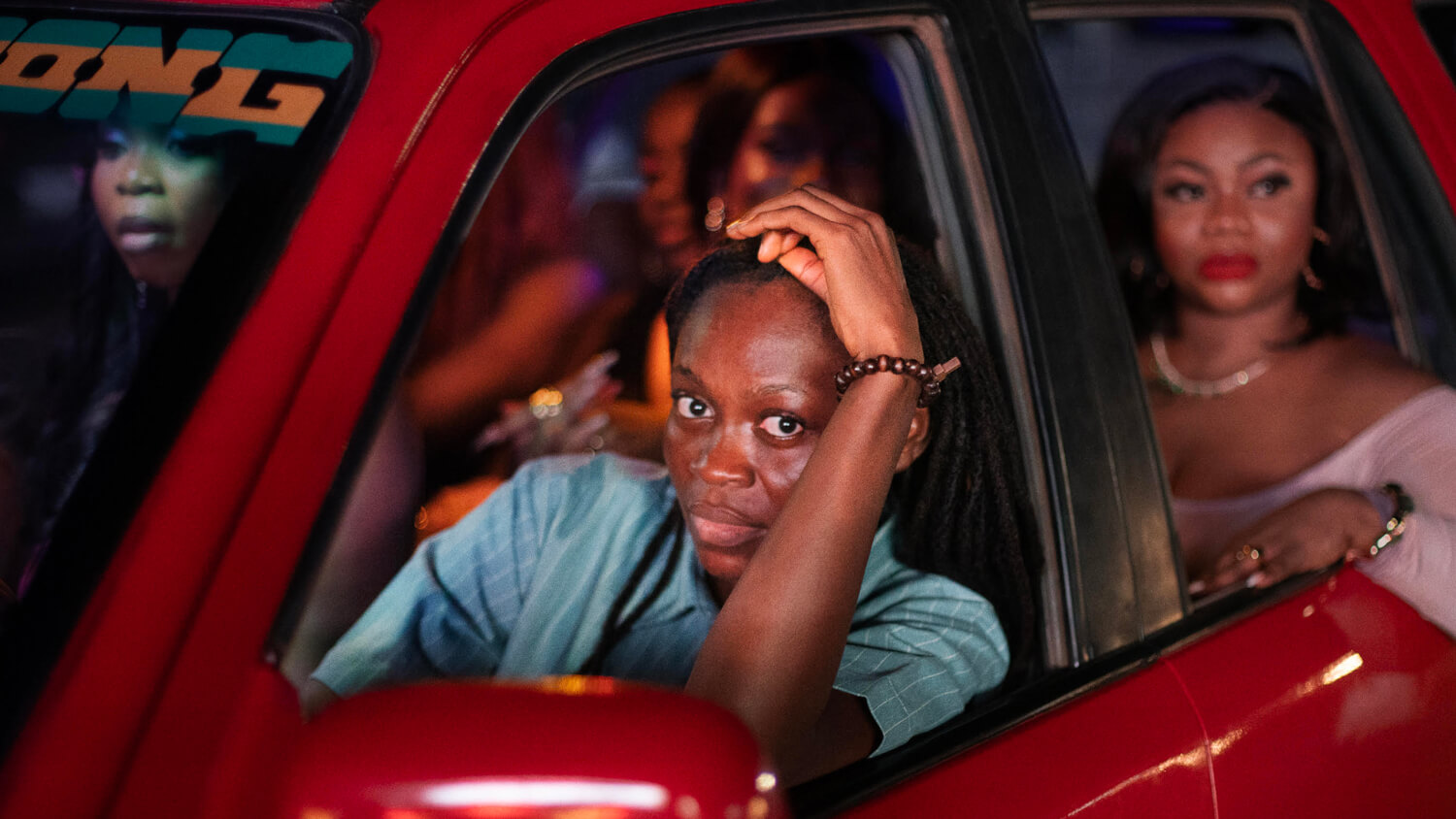
Lady, a taxi driver existing with the bravado born of cynical adaptation, is offered a chance to make money driving her once-best friend and other sex workers, reintroducing her to the traumatic lifestyle she has been running away from. The film introduces us to Lady as a girl without much outward vulnerability, with a masculine temperament that shields her from the unforgiving world of Lagos. Through her volatile and often confrontational outbursts toward the existing patriarchal system, the film presents her as a product of a Nigeria at its breaking point, with frustrations bubbling to the surface.
Stay ahead of Kenya & East Africa’s film and TV.
Get our stories in your inbox — Subscribe to our newsletter now.
Emotionally repressed, Lady leads the film across the city while navigating her own diluted presence within it. Set against economic precarity and existential isolation, the story allows no sentimentality as it pulls its plotlines into place through the visually tuned writing and directing of Olive Nwosu, who breathes beauty beneath its severity. Through a portrait of someone whose sense of worth is inseparable from labour and repressed trauma, Lady becomes a stark embodiment of a generation locked into permanent survival mode, chasing dignity, recognition and belonging within deeply corrupted economic and political systems.
This moral realism is unflinching and inescapable. The central performances of Jessica Gabriel’s Ujah as Lady and Amanda Oruh as her childhood friend Pinky carry the film with extraordinary physical intensity, with a script heavily burdened with silence for them to fill with emotion. Rage simmers just beneath the surface of most of the characters, paired with a desperation so internalised it barely needs words. The characters are not designed to be liked, nor does Lady ask for sympathy. Instead, with the voice of an activist narrator awakening audiences to the broken systems around the city, the film simply asks viewers to inhabit their lived existence for the duration of its runtime.
From hearing the Afrobeats songs we sing word for word in the presence of characters who live them, to the juxtaposition of oil rigs in a country struggling with fuel scarcity, Lady captures an authenticity that simplifies its thematic foundations without exposition. Formally, the filmmaking mirrors this rigidity. Clean, economical compositions delineate a narrow world with little room to breathe, reinforcing how constrained the characters’ options truly are.
The stylistic composition and the criminal entanglements of sex work have been explored repeatedly on screen, even within the continent, with Kenyan-Swedish thriller The Dog being a recent release with a similar feel. At times, these visually arresting reconstructions of the urban disenfranchised usually rely on choreographed violence to dictate pacing, but Lady keeps clear of that – even when violence is implied – choosing instead to build dramatic and emotional ruminations, with violence eventually existing as reckoning rather than entertainment. Slivers of vulnerability are embedded within the grimness, ensuring we never lose sight of the fundamental blamelessness that shaped, and misshaped, the characters and Lagos itself.
With Lady too cynical to enter her generation’s political revolution stirring around her, the film probes questions about different versions of freedom. The film itself is, in its own right, an exercise in creative expressiveness, moving away from the conservatively naïve media we often produce toward a more scandalous rendezvous of sex and promiscuity that pulses beneath our more reserved identity packaging. While one antidote to this identity crisis offered by Lady lies in the spaces created by members of the diaspora who return to build enclaves of freedom, the film winds through these paradoxical and intermediate abstractions before settling into a final frame that displaces individual uncertainty into a simpler form of collective resistance.
Through a female protagonist largely closed off from her vulnerabilities – hiding unexpressed sexual identity and repressed trauma behind an abrasive, withdrawn, and confrontational personality – Lady, despite its best moments, sustains its intentions without offering much more beyond that. The film is spiced with grounded depictions of sex work, sexual identity, and gendered roles in the hustle, yet through the perspective of someone running away from self-scrutiny for most of the film, these ideas never reach their fully rounded form. There is so much context and consequence unfolding away from Lady, but the film unfortunately remains tethered to her, leaning toward a voyeuristic vantage point that hovers around these women’s lives and the trauma of sex that defines them, rather than fully immersing audiences within it.
Ultimately, Lady reintroduces elements of old Nollywood through its abrasive personalities while embracing a more modern and contemplative diction that manages to personify the Gen Z revolution across the political, sexual, gendered, economic, and traumatic frustrations increasingly shaping cities across Africa and the wider world.
Lady had its world premiere at the 2026 Sundance Film Festival, screening in the World Cinema Dramatic Competition. Next, the film heads to Berlinale 2026, where it will be screening in the Panorama programme.
EDITOR’S NOTE:
All reporting, interviews, and reviews on Sinema Focus are protected under international copyright law and the Kenya Copyright Act, 2001. No part of this publication may be reproduced, rewritten, republished, or redistributed in any form by media outlets without prior written consent. For reprint or syndication inquiries, contact editorial@sinemafocus.com.
©️ 2026 Sinema Focus / African Film Press. All rights reserved.
Never miss a moment.
Get the latest stories from Sinema Focus delivered straight to your inbox. Subscribe to our newsletter now.